Introduction
Preparing for IVF can feel a little like preparing for a marathon. You wouldn’t run a marathon without training your body first, right? The same idea applies to fertility treatment. Your body needs the right nutrients and support before starting the IVF journey.
Many couples focus only on the medical procedures involved in IVF, but the preparation phase is equally important. Nutrition, lifestyle changes, and specific supplements can help create a healthier environment for eggs, sperm, and embryo development.
While vitamins and supplements cannot guarantee pregnancy, research suggests they may improve reproductive health and increase the chances of IVF success. Many fertility experts, including the best IVF specialist in New Delhi, often recommend certain nutrients to support egg quality, hormone balance, and overall reproductive health.
So, which vitamins and supplements should you consider before IVF? Let’s explore the most important ones and how they may help.
1. Understanding Pre-IVF Preparation
Before starting IVF treatment, doctors often recommend preparing your body for several weeks or months. This preparation phase focuses on improving overall health, hormone balance, and reproductive function.
Think of your reproductive system as a garden. If the soil is healthy, seeds have a better chance of growing. Similarly, when your body receives the right nutrients, it creates a better environment for fertilization and implantation.
Preparation may include:
- Improving diet
- Managing stress
- Taking fertility supplements
- Correcting vitamin deficiencies
- Maintaining a healthy weight
These steps may improve both egg and sperm quality before the IVF cycle begins.
2. Why Nutrition Matters Before IVF
Nutrition plays a crucial role in fertility. Eggs take around 90 days to mature, which means the nutrients you consume today may affect egg quality months later.
A nutrient-rich diet can support:
- Hormone balance
- Egg and sperm health
- Embryo development
- Uterine lining quality
Deficiencies in vitamins like Vitamin D, folic acid, and iron can negatively impact fertility. That’s why fertility experts often recommend supplements during the pre-IVF phase.
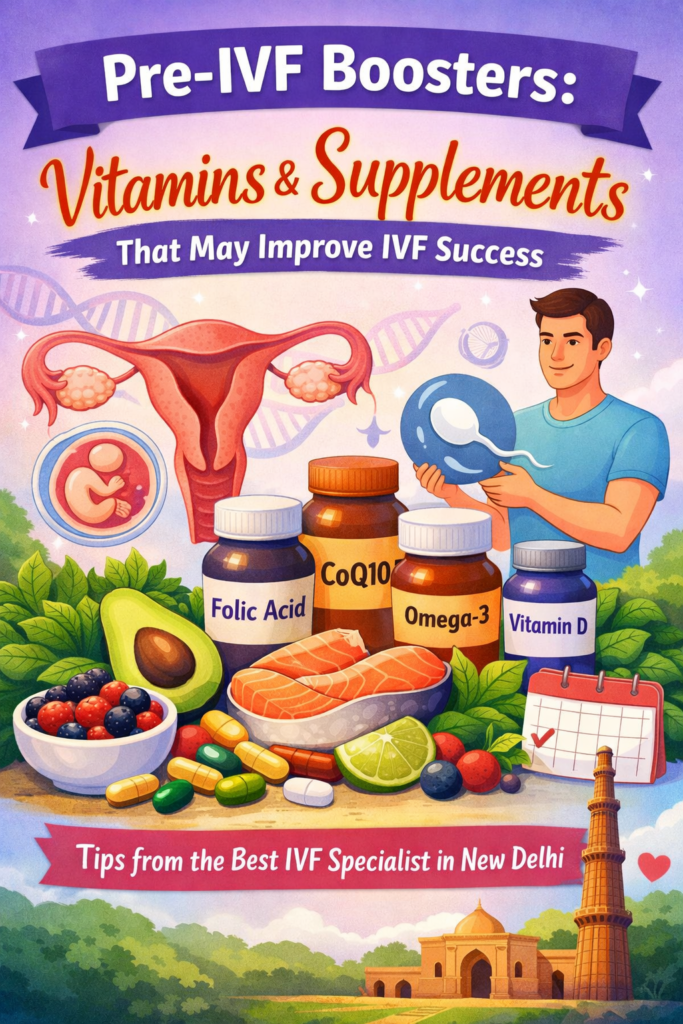
3. Folic Acid: The Essential Fertility Vitamin
Folic acid is one of the most important vitamins for women trying to conceive.
It plays a key role in:
- DNA formation
- Cell growth
- Healthy embryo development
Doctors typically recommend 400–800 mcg of folic acid daily before pregnancy.
Benefits of Folic Acid Before IVF
- Improves egg quality
- Supports embryo development
- Reduces risk of birth defects
- Supports early pregnancy health
Many fertility clinics recommend starting folic acid at least three months before IVF treatment.
4. Vitamin D and Fertility Health
Vitamin D is often called the “sunshine vitamin,” but its role goes far beyond bone health.
Research suggests that adequate Vitamin D levels may help improve IVF outcomes by supporting hormone balance and implantation.
How Vitamin D Helps Fertility
- Supports ovarian function
- Improves uterine lining receptivity
- Helps regulate reproductive hormones
- May improve IVF success rates
Unfortunately, many people have low Vitamin D levels, especially those who spend most of their time indoors. A simple blood test can determine whether supplementation is needed.
5. Coenzyme Q10 (CoQ10) for Egg Quality
One of the most talked-about fertility supplements today is Coenzyme Q10 (CoQ10).
This antioxidant supports cellular energy production, which is essential for healthy eggs.
Benefits of CoQ10 Before IVF
- Improves egg quality
- Supports mitochondrial function
- May help women with low ovarian reserve
- May improve embryo quality
Women over 35 years of age are often advised to consider CoQ10 supplements because egg quality naturally declines with age.
6. Omega-3 Fatty Acids for Hormonal Balance
Omega-3 fatty acids are healthy fats found in fish oil, flaxseeds, and walnuts.
They play an important role in reducing inflammation and balancing hormones, both of which are essential for fertility.
How Omega-3 Supports Fertility
- Improves blood flow to reproductive organs
- Supports hormone regulation
- Helps improve egg quality
- May support embryo implantation
Omega-3 supplements may also help reduce stress and improve overall health during fertility treatment.
7. Iron and Fertility Support
Iron deficiency is common among women of reproductive age, especially those with heavy menstrual cycles.
Iron helps the body produce healthy red blood cells, which carry oxygen throughout the body—including the reproductive organs.
Why Iron Matters Before IVF
- Supports ovulation
- Improves energy levels
- Supports uterine health
- Helps prepare the body for pregnancy
However, iron supplements should only be taken if recommended by a doctor.
8. Myo-Inositol and PCOS Support
Women with Polycystic Ovary Syndrome (PCOS) often struggle with hormonal imbalance and irregular ovulation.
Myo-inositol is a natural compound that may help improve insulin sensitivity and hormone regulation.
Benefits of Myo-Inositol
- Improves ovulation
- Supports hormone balance
- May improve egg quality
- May increase IVF success in PCOS patients
Many fertility specialists recommend myo-inositol for women with PCOS preparing for IVF.
9. Antioxidants and Reproductive Health
Oxidative stress can damage eggs and sperm. Antioxidants help neutralize harmful molecules called free radicals.
Important fertility antioxidants include:
- Vitamin C
- Vitamin E
- Selenium
- Zinc
- CoQ10
Why Antioxidants Matter
- Protect egg cells
- Improve sperm health
- Support embryo development
- Improve reproductive health
Adding antioxidant-rich foods and supplements can support fertility naturally.
10. Vitamin E for Endometrial Health
Vitamin E is another antioxidant that plays a role in reproductive health.
It may help improve blood flow to the uterus, which supports a healthy uterine lining.
Benefits of Vitamin E
- Improves endometrial thickness
- Supports implantation
- Reduces oxidative stress
- Improves reproductive health
A healthy uterine lining is crucial for embryo implantation during IVF.
11. Zinc and Male Fertility
IVF success is not only about female fertility. Male reproductive health is equally important.
Zinc is an essential mineral that supports sperm production and testosterone levels.
Benefits of Zinc for Men
- Improves sperm count
- Supports sperm motility
- Improves sperm quality
- Supports reproductive hormones
Couples preparing for IVF should ensure both partners maintain proper nutrient intake.
12. Prenatal Vitamins Before IVF
Prenatal vitamins are often recommended even before pregnancy begins.
They typically contain a combination of essential nutrients such as:
- Folic acid
- Iron
- Vitamin D
- Calcium
- Iodine
Prenatal vitamins help fill nutritional gaps and prepare the body for pregnancy.
13. Lifestyle Habits That Boost IVF Success
Supplements alone cannot guarantee IVF success. Lifestyle habits also play a major role.
Healthy Habits to Follow
- Eat a balanced fertility-friendly diet
- Maintain a healthy weight
- Avoid smoking and alcohol
- Reduce caffeine intake
- Exercise regularly
- Manage stress through yoga or meditation
Think of supplements as supporting players, while lifestyle habits form the foundation of fertility health.
14. When to Start Pre-IVF Supplements
Experts generally recommend starting fertility supplements three months before IVF treatment.
This timeline supports the full development cycle of eggs and sperm.
However, supplements should always be taken under medical supervision. Taking unnecessary or excessive supplements can sometimes cause more harm than good.
15. Consulting a Fertility Expert
Every couple’s fertility journey is unique. What works for one person may not work for another.
Before starting any supplements, it’s important to consult a qualified fertility specialist who can evaluate:
- Hormone levels
- Nutritional deficiencies
- Medical history
- Reproductive health
A personalized treatment plan from the best IVF specialist in New Delhi can help improve your chances of IVF success while ensuring safety.
Conclusion
Preparing for IVF is about more than just medical treatment—it’s about giving your body the best possible foundation for pregnancy.
Vitamins and supplements like folic acid, Vitamin D, CoQ10, omega-3 fatty acids, and antioxidants may support fertility and improve reproductive health. Combined with a balanced diet and healthy lifestyle, these nutrients can help create a more supportive environment for fertilization and embryo implantation.
However, supplements should never replace professional medical guidance. Consulting an experienced fertility expert, such as the best IVF specialist in New Delhi, can help you choose the right supplements and develop a personalized IVF preparation plan.
Remember, IVF is a journey. With the right preparation, support, and medical care, many couples successfully achieve their dream of parenthood.
FAQs
1. Which vitamins are most important before IVF?
The most commonly recommended vitamins before IVF include folic acid, Vitamin D, CoQ10, omega-3 fatty acids, and prenatal vitamins. These nutrients may support egg quality and reproductive health.
2. How long should I take supplements before IVF?
Most fertility experts recommend taking supplements at least 3 months before starting IVF treatment to support egg and sperm development.
3. Can supplements really improve IVF success?
Supplements may support reproductive health and improve egg or sperm quality, but they cannot guarantee IVF success. Medical treatment and overall health also play important roles.
4. Should men also take supplements before IVF?
Yes. Male fertility significantly affects IVF outcomes. Supplements like zinc, antioxidants, and omega-3 fatty acids may support sperm health.
5. Should I consult a doctor before taking fertility supplements?
Yes, always consult a fertility specialist before taking supplements. A doctor can recommend the right nutrients based on your health and fertility condition.