
Introduction
Trying to conceive can be an emotional journey. When fertility tests reveal high prolactin levels, many couples feel confused and worried. Questions like “Will IVF still work?” or “Can high prolactin stop pregnancy completely?” are very common.
The good news is that high prolactin is a treatable condition, and many couples successfully conceive with proper medical care and IVF treatment.
Prolactin is a hormone produced by the pituitary gland. Its main job is to help the body produce breast milk after childbirth. But when prolactin levels rise too high in women who are trying to conceive, it can disrupt ovulation and affect fertility.
Think of the reproductive system like an orchestra. Each hormone plays a specific instrument. When prolactin becomes too loud, it can drown out the signals needed for ovulation, making pregnancy difficult.
However, modern fertility treatments such as In Vitro Fertilization (IVF) can help couples overcome this challenge. With proper treatment and guidance from the best IVF Doctor in Delhi NCR, many patients with high prolactin successfully achieve pregnancy.
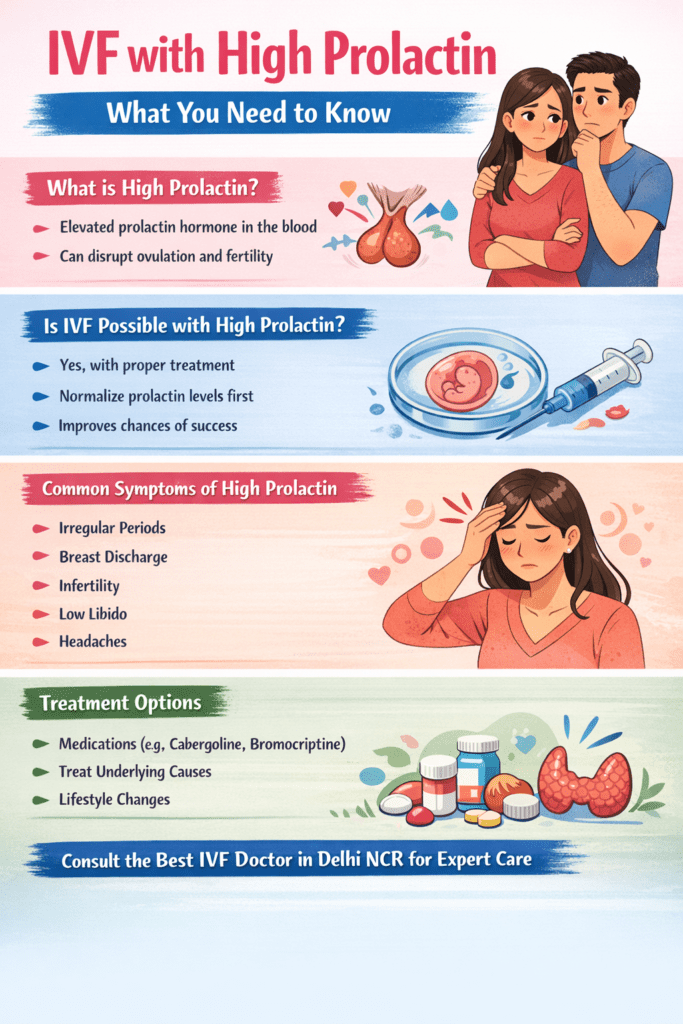
1. What is Prolactin?
Prolactin is a hormone produced by the pituitary gland, located at the base of the brain. Its primary role is to stimulate breast milk production after childbirth.
However, prolactin also interacts with several reproductive hormones including:
- Estrogen
- Progesterone
- FSH (Follicle Stimulating Hormone)
- LH (Luteinizing Hormone)
When prolactin levels are normal, these hormones work together to regulate ovulation and menstrual cycles.
But when prolactin levels become too high, the hormonal balance gets disturbed.
2. What is Hyperprolactinemia?
Hyperprolactinemia is the medical term for abnormally high prolactin levels in the blood.
This condition can occur in both men and women, but it often affects female fertility more significantly.
Normally, prolactin levels in women are:
- Non-pregnant women: 5–25 ng/mL
- Pregnant women: Much higher
When levels rise above the normal range in non-pregnant women, it may interfere with ovulation.
3. Causes of High Prolactin Levels
High prolactin levels can develop for several reasons.
Hormonal Disorders
Conditions such as hypothyroidism can increase prolactin levels.
Pituitary Tumors (Prolactinoma)
A small benign tumor in the pituitary gland may produce excess prolactin.
Medications
Certain medicines can increase prolactin levels, including:
- Antidepressants
- Blood pressure medications
- Antipsychotic drugs
Stress
Believe it or not, chronic stress can also raise prolactin levels.
Polycystic Ovary Syndrome (PCOS)
Some women with PCOS may also experience elevated prolactin.
4. How High Prolactin Affects Fertility
High prolactin can disrupt the delicate hormonal balance needed for ovulation.
It does this by reducing the release of GnRH, a hormone that signals the ovaries to release eggs.
As a result:
- Ovulation may stop
- Menstrual cycles become irregular
- Egg quality may decline
In simple terms, the ovaries stop receiving the signal to release eggs.
Without ovulation, natural pregnancy becomes difficult.
5. Symptoms of High Prolactin
Some women experience noticeable symptoms, while others may have none.
Common symptoms include:
- Irregular periods
- Missed menstrual cycles
- Breast milk discharge without pregnancy
- Infertility
- Low libido
- Headaches
Because symptoms can be subtle, many women discover high prolactin during fertility testing.
6. Can You Do IVF with High Prolactin?
Yes, IVF can still be successful even if you have high prolactin levels.
However, fertility specialists usually recommend normalizing prolactin levels before starting IVF treatment.
Why?
Because balanced hormones improve:
- Egg development
- Ovulation response
- Implantation success
Think of IVF like planting seeds in a a garden. If the soil conditions are poor, the seeds may struggle to grow. Correcting prolactin levels improves the “soil” of the reproductive system.
7. Diagnosis of High Prolactin Before IVF
Before starting IVF, fertility specialists usually perform several tests.
Blood Tests
- A simple blood test measures prolactin levels.
Thyroid Testing
- Doctors often check thyroid hormones because thyroid problems can increase prolactin.
MRI Scan
- If prolactin levels are very high, an MRI of the brain may be recommended to check the pituitary gland.
These tests help doctors determine the exact cause of elevated prolactin.
8. Treatment Options for High Prolactin
The good news is that high prolactin is usually easy to treat.
Medications
Doctors commonly prescribe medications such as:
- Cabergoline
- Bromocriptine
These medicines reduce prolactin production and help restore ovulation.
Treating Underlying Conditions
- If hypothyroidism is causing high prolactin, thyroid medication may solve the issue.
Surgery
- In rare cases involving large pituitary tumors, surgery may be required.
However, most patients respond well to simple medication therapy.
9. IVF Success Rates with High Prolactin
Once prolactin levels are controlled, IVF success rates become similar to those of other patients.
Success rates depend on several factors:
- Age
- Egg quality
- Sperm quality
- Uterine health
- Overall fertility condition
With proper treatment and care from the best IVF Doctor in Delhi NCR, many couples achieve successful pregnancy.
10. Lifestyle Changes That Help Balance Prolactin
Lifestyle also plays an important role in hormone balance.
Helpful habits include:
Stress Management
Practice activities such as:
- Meditation
- Yoga
- Deep breathing
Healthy Diet
Focus on foods rich in:
- Vitamin B6
- Zinc
- Magnesium
Adequate Sleep
- Sleep helps regulate hormones and supports reproductive health.
Regular Exercise
- Moderate exercise improves overall hormonal balance.
11. When Should You See a Fertility Specialist?
You should consider consulting a fertility doctor if:
- You have been trying to conceive for 12 months without success
- Your menstrual cycles are irregular
- You experience milk discharge without pregnancy
- Blood tests show elevated prolactin levels
Early consultation can save time and improve treatment outcomes.
12. How the Best IVF Doctor in Delhi NCR Can Help
Fertility treatment requires expert guidance and personalized care.
A skilled specialist will:
- Identify the exact cause of high prolactin
- Provide proper medication
- Monitor hormone levels
- Plan IVF treatment at the right time
The best IVF Doctor in Delhi NCR uses advanced fertility techniques and individualized treatment plans to maximize the chances of pregnancy.
13. Emotional Support During Fertility Treatment
Fertility treatment is not only a medical journey — it is also an emotional one.
Couples often experience:
- Stress
- Anxiety
- Hope and disappointment
Talking to counselors, joining support groups, and maintaining open communication with your partner can make the journey easier.
Remember, you are not alone in this process.
Conclusion
High prolactin levels can feel like a major obstacle on the path to parenthood. But the truth is that this condition is treatable, and many couples successfully conceive after proper treatment.
With accurate diagnosis, medication, lifestyle improvements, and advanced fertility treatments such as IVF, the chances of pregnancy can improve significantly.
The key is early detection and expert medical care. Consulting the best IVF Doctor in Delhi NCR can help you understand your condition, restore hormonal balance, and guide you toward the best fertility treatment options.
Parenthood may take a little extra effort in such cases, but with the right support and medical expertise, your dream of having a baby can still become a reality.
FAQs
1. Can high prolactin prevent pregnancy completely?
High prolactin can interfere with ovulation, making pregnancy difficult. However, with proper treatment and medical care, many women can still conceive successfully.
2. Can IVF work if prolactin levels are high?
Yes, IVF can work with high prolactin. However, doctors usually treat and normalize prolactin levels before starting IVF to improve success rates.
3. How long does it take to lower prolactin levels?
With medication such as cabergoline or bromocriptine, prolactin levels often improve within a few weeks to a few months.
4. What foods help reduce prolactin levels?
Foods rich in vitamin B6, zinc, and magnesium may support hormonal balance. Examples include bananas, spinach, nuts, and whole grains.
5. Who should I consult for IVF with high prolactin?
It is best to consult an experienced fertility specialist such as the best IVF Doctor in Delhi NCR, who can evaluate hormone levels and recommend the most suitable treatment plan.
In this article, we will explore how high prolactin affects fertility, how IVF can help, and what treatment options are available.