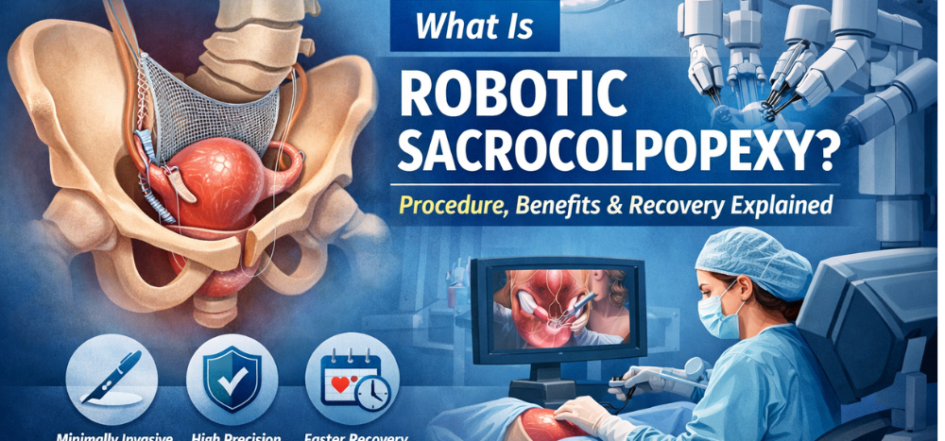
Have you ever felt a heavy pulling sensation in your lower abdomen? Or noticed a bulge in the vaginal area that just doesn’t feel right? You’re not alone. Many women experience a condition called pelvic organ prolapse, especially after childbirth or menopause.
The good news? Modern medical technology has made treatment safer and more precise than ever. One of the most advanced treatments available today is robotic sacrocolpopexy.
But what exactly is it? Is it painful? How long does recovery take? And how does it connect with overall women’s health and fertility care, especially when consulting the best IVF Doctor in Delhi NCR?
Let’s break it down in simple, clear language.
1. Understanding Pelvic Organ Prolapse
Before we discuss robotic sacrocolpopexy, let’s first understand what the treatment entails.
Pelvic Organ Prolapse (POP) occurs when the muscles and tissues supporting pelvic organs weaken. When this happens, the organs may shift downward and cause:
- Cystocele (Bladder Prolapse) – Bladder leakage or urinary issues
- Vaginal Vault Collapse – Not uncommon after a hysterectomy
Think of pelvic muscles like ropes holding up a hammock; when their tension loosens, organs shift downward.
Common symptoms include:
- Vaginal bulging
- Pressure in the pelvis
- Urinary leakage
- Difficulties during intercourse
If left untreated, prolapse can significantly affect everyday life.
2. What Is Robotic Sacrocolpopexy?
Robotic sacrocolpopexy is a minimally invasive surgery used to correct pelvic organ prolapse.
Simply put, this procedure restores the normal vaginal position by attaching it securely to the sacrum bone (at the base of the spine) using surgical mesh.
The surgery is performed using a robotic-assisted system, which allows surgeons to operate with increased precision.
Important: The robot does not work by itself. It is always under the direct control of an experienced surgeon.
3. Who Is a Candidate for This Procedure?
You might be asking, “Do I really need surgery?”
In most cases, surgery is recommended if:
- Your vaginal vault prolapse is severe
- Symptoms interfere with daily activities
- Non-surgical remedies like pessaries don’t work
- You have experienced recurrent prolapse after prior surgery
Women who have had a hysterectomy may be ideal candidates.
Your physician will conduct an assessment, considering several important factors before recommending surgery.
4. How Robotic Surgery Works
Robotic surgery may sound futuristic, but it is actually an advanced form of laparoscopy.
Here’s how it works:
- Small keyhole incisions are made in the abdomen
- A tiny camera provides a high-definition 3D view
- Robotic arms hold surgical instruments
- The surgeon controls everything from a console
The magnified view allows for extremely precise movements — like using tweezers instead of bulky tools.
5. Step-by-Step Procedure Explained
Here is how robotic sacrocolpopexy is performed:
Step 1: Anesthesia
You will be given general anesthesia.
Step 2: Small Incisions
3–5 small cuts are made in your abdomen.
Step 3: Mesh Attachment
Surgical mesh is attached to the vaginal wall.
Step 4: Sacrum Attachment
The mesh is secured to the sacrum bone.
Step 5: Closure
Incisions are closed using sutures.
The procedure usually lasts 2–4 hours.
6. Advantages of Robotic Sacrocolpopexy
Why do many doctors recommend robotic surgery?
- Smaller incisions – Less scarring
- Minimal blood loss – Lower risk of complications
- Faster recovery – Shorter hospital stay
- Lower recurrence rate – Better long-term success
- Enhanced precision – Improved 3D visualization
Compared to open surgery, robotic procedures are generally more comfortable for patients.
7. Risks and Complications
Like any surgery, robotic sacrocolpopexy carries potential risks, including:
- Bleeding
- Mesh complications
- Infection
- Injury to bladder or bowel
- Blood clots
However, these risks are relatively low when the procedure is performed by an experienced specialist.
Always discuss your concerns openly with your healthcare provider.
8. Recovery Timeline
When will you feel normal again?
Here is a general recovery timeline:
First 24 Hours
- Hospital observation
- Mild pain or discomfort
First Week
- Light walking encouraged
- Avoid heavy lifting
4–6 Weeks
- Gradual return to regular activities
After 8 Weeks
- Most women achieve full recovery
Recovery is typically smoother compared to traditional open surgery.
9. Life After Surgery
Many women report:
- Improved bladder control
- Greater sexual comfort
- Relief from pelvic pressure
Imagine carrying a heavy burden all day and suddenly putting it down — that is how many patients describe their relief after treatment.
10. Impact on Fertility and IVF
You may wonder: Will robotic sacrocolpopexy affect fertility or IVF?
In most cases:
- It does not directly affect fertility
- The procedure is usually performed after childbearing
- Future pregnancy is generally not recommended afterward
Women planning fertility treatments should work closely with a gynecologist or an IVF Doctor in Delhi NCR.
Pelvic health plays an important role in IVF success, and a multidisciplinary approach ensures better outcomes.
11. Why Selecting the Right Specialist Is Important
Robotic surgery requires:
- Advanced training
- Experience in pelvic reconstructive surgery
- Access to robotic systems
Choosing a skilled surgeon improves safety and results.
If you are also seeking fertility treatment, consulting the best IVF Doctor in Delhi NCR ensures that both prolapse repair and reproductive health are managed efficiently and safely.
12. Robotic Surgery vs Traditional Surgery
Here is a quick comparison:
| Feature | Robotic Surgery | Open Surgery |
|---|---|---|
| Incisions | Small | Large |
| Recovery | Faster | Slower |
| Blood Loss | Minimal | More |
| Hospital Stay | 1–2 days | 4–5 days |
| Scarring | Minimal | Visible |
For many women, robotic surgery offers clear advantages over traditional open surgery.
13. Cost of Robotic Sacrocolpopexy in India
Costs vary depending on:
- Type of hospital
- Surgeon’s expertise
- City
In metro cities, robotic surgery may cost more due to advanced equipment.
However, many patients consider it worthwhile because of:
- Faster recovery
- Less pain
- Better long-term outcomes
Always check your insurance coverage.
14. Emotional and Mental Well-Being
Pelvic organ prolapse can affect:
- Self-esteem
- Intimacy
- Confidence
Healing is not just physical.
After treatment, many women feel emotionally relieved. Restoring pelvic support often brings peace of mind.
Do not overlook this important part of recovery.
15. When to Consult a Doctor
Seek medical advice if you experience:
- Vaginal bulging
- Persistent pelvic pressure
- Urinary leakage
- Pain during intercourse
Early diagnosis prevents complications.
If you are also planning fertility treatment, coordinate care with a pelvic specialist and the best IVF Doctor in Delhi NCR for comprehensive management.
Conclusion
Robotic sacrocolpopexy is an advanced, minimally invasive solution for pelvic organ prolapse. It offers greater precision, smaller incisions, faster recovery, and long-term relief.
If you are experiencing pelvic pressure or vaginal bulging, effective treatment options are available. Early consultation and choosing an experienced specialist make a significant difference.
Women’s health is interconnected. From prolapse repair to fertility planning, coordinated care — especially with the best IVF Doctor in Delhi NCR — ensures safer outcomes and long-term well-being.
Your body supports you every day. Sometimes, it simply needs the right support in return.
FAQs
1. Is robotic sacrocolpopexy painful?
Most patients report mild to moderate discomfort that is manageable with medication and typically less painful than open surgery.
2. How long does robotic sacrocolpopexy take?
The procedure usually lasts between 2 and 4 hours, depending on complexity.
3. Can prolapse return after robotic sacrocolpopexy?
Recurrence is possible but less common when performed by an experienced surgeon.
4. Do I need to stay in the hospital after surgery?
Most patients stay for 1–2 days following the procedure.
5. Is robotic sacrocolpopexy safe for older women?
Yes, if overall health is stable. A thorough medical evaluation ensures safety before surgery.