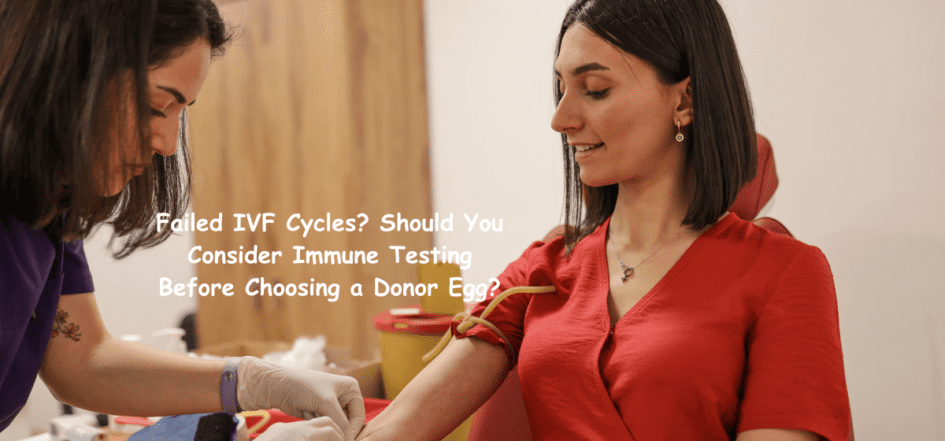
No one really prepares to undergo IVF to expand their family one day. And nothing ever prepares you for the emotional grief of infertility and failed IVF cycles. For couples who have undergone repeated cycles, the common advice is to pursue IVF with donor eggs. But, before you jump onto that path, we have one critical question for you: Would it be worth it to pursue immune testing?
The short answer to that question is yes. While IVF with donor eggs is proven to be successful, the absence of a healthy donor egg is not the only reason why embryos are failing to implant or why women are experiencing repeated miscarriages. Identifying and treating immune system issues is proven to be beneficial for affording women the opportunity to experience pregnancy without the need for donor eggs.
To illustrate the Seed and Soil theory of IVF, the donor egg must be the healthiest seed and the recipient uterus must be the healthiest, most fertile soil. Without the healthiest donor egg and the healthiest recipient uterus, the embryo is unlikely to even implant.
In this blog, we will provide you with the most relevant information with respect to IVF failures, immune testing and the use of donor eggs as well as the most appropriate clinical counsel practices of the best IVF Doctor in Delhi NCR.
Table of Contents
| Sr# | Headings |
|---|---|
| 1 | What is IVF Failure? |
| 2 | What Constitutes Multiple Failed IVF Cycles? |
| 3 | What Causes Failed IVF Cycles? |
| 4 | What is Immune Testing in Fertility? |
| 5 | How Does the Immune System Impact Implantation? |
| 6 | Immune Testing in Fertility Care |
| 7 | When is Immune Testing Needed? |
| 8 | Overview of Donor Egg IVF |
| 9 | Should You Get Immune Testing or Donor Eggs First? |
| 10 | Why Get Immune Testing? |
| 11 | What are the Concerns with Immune Testing? |
| 12 | What Should You Ask Your Fertility Specialist? |
| 13 | What is the Importance of an IVF Expert? |
| 14 | Lifestyle Changes that Improve IVF Chances |
| 15 | Conclusion |
1. What is IVF Failure?
An IVF cycle is deemed unsuccessful when an embryo does not implant, or if a pregnancy does not continue successfully after implantation.
A failed IVF cycle does not indicate a major cause for concern. In fact, IVF success is not entirely guaranteed even when optimal conditions are present. There are numerous factors that can impact the success of the cycle such as age, health of the embryo, the lining of the uterus, and the hormonal and reproductive health of a person.
Experiencing a failed cycle can be very disheartening and emotionally exhausting, but it is expected in the journey of many couples.
2. At What Point is an IVF Cycle Considered Recurrent?
If multiple good quality embryos are transferred and the cycles still fail, most fertility experts will begin to analyze the IVF process in further detail if there have been two or three unsuccessful IVF attempts.
Usually, they will start to look into the following issues:
- Uterine abnormalities
- Genetic issues
- Hormonal issues
- Blood clotting issues
- Immune issues
At this stage, most experts will start talking about the different types of immune testing.
3. What are the Main Causes of Failed IVF Cycles?
Quality of the Embryo
In some instances, embryos may have chromosomal abnormalities, in which case, they may not implant or even lead to a miscarriage.
Age of the Woman
As women get older, the quality of their eggs declines, which negatively affects the development of an embryo.
Quality of the Uterus
Uterine fibroids, polyps, and tissue along with some endometrial issues may prevent an embryo from implanting.
Hormonal Issues
Some issues with Thyroid, Insulin, and Progesterone may also affect the outcome of a pregnancy.
Immune Issues
Lastly, in some instances, the immune system may pose issues that affect the implantation of the embryo or the early development of pregnancy.
4. What Does Immune Testing in Fertility Treatment Mean?
Immune testing in fertility will analyze some of the immune markers that may play a role in the failure of implantation and pregnancy. The focus of this type of testing will be to analyze if any of the immune-related issues may be affecting the outcome of IVF in the case of multiple unsuccessful IVF attempts.
Following tests may be needed:
- Assessment of Natural Killer (NK) cells
- Autoimmune markers
- Antiphospholipid antibodies
- Thyroid antibodies
- Inflammatory markers
Not all patients will need any of the above tests but may be considered for limited patients only.
5. How Immune System Impacts Implantation
Pregnancy causes some changes in the immune system.
When an embryo implants, the body detects its presence and adjusts for its growth, which requires a balancing act for both immune protection and tolerance.
Immune Tolerance
A body with the appropriate immune response will permit the embryo to implant.
Immune Overactivity
Some believe that excessive immune response may prevent implantation or may cause a miscarriage.
This area is still complex and further studies are required to understand more about the immune system and its link to fertility.
6. Immune Tests in Fertility Care
Natural Killer (NK) Cell Testing
NK cells are a type of immune cell that help defend the body from infection.
Some fertility experts look at levels or activity of NK cells for patients that have recurrent IVF failures.
Antiphospholipid Antibody Testing
These antibodies are linked to blood clotting disorders that may affect a woman in pregnancy.
Thyroid Antibody Testing
Autoimmune thyroid conditions may impact both fertility and pregnancy.
ANA Testing
Antinuclear antibodies (ANA) testing can help with the assessment of some autoimmune conditions.
Cytokine Assessment
Cytokines are immune proteins that can signal inflammation.
These may be useful tests for patients in specific situations only.
7. Why is Immune Testing Needed?
Not all IVF patients need immune testing, but it could be useful when:
- IVF cycles are unsuccessful
- There is implantation failure
- There is miscarriage or pregnancy loss
- There is an autoimmune disease
- There is unexplained infertility and all other medical tests are normal
An experienced fertility specialist can guide the individual patient on the need for testing.
8. An Overview of Donor Egg IVF
In IVF with donor eggs, the eggs are obtained from a donor and not from the IVF patient.
This is preferred in:
- Women who are older
- Women with fewer eggs
- Women with fewer healthy embryos
- Women with higher risk of embryo genetic disorders
Donor eggs are from younger, healthy women and have a good chance of success. IVF with donor eggs allows many couples to start their family when other treatments have failed.
9. Immune Testing Versus Donor Eggs?
This is a difficult and important choice for couples to make.
Donor eggs may be the best option when poor IVF outcomes are due to poor egg quality.
If there are many embryos of good quality and implantation is unsuccessful, immune testing may be the best option to identify hidden factors.
10. Advantages of Immune Testing
Unmasking Concealed Problems
Immune testing may expose hidden immune issues.
Creation of Tailored Treatment Strategies
Fertility treatment plans may be personalized based on immune testing results.
Better Understanding of Treatment Failure
Testing may provide additional insight into why IVF cycles have failed repeatedly.
11. Challenges and Controversies Surrounding Immune Testing
Scientific Disagreement
There is conflicting opinion among scientists regarding the role of the immune system in fertility.
Testing Methods Vary
Testing may be conducted and interpreted differently in various clinics.
Research is Still Evolving
The effectiveness of some immune-based fertility treatments remains under investigation.
12. Questions to Ask Your Fertility Specialist
- Why did my IVF cycles not work in the past?
- Were my embryos good quality?
- Is there a chance my immune system is a factor?
- What immune testing would you recommend?
- How would this change my treatment?
- Would it be better to go with donor eggs or wait and see?
13. Why the Right IVF Expert is Important
The best IVF Doctor in Delhi NCR can provide:
- A complete fertility evaluation
- Advanced diagnostic testing
- Personalized treatment recommendations
- A clear fertility roadmap
- Honest guidance regarding donor egg IVF
14. Lifestyle Changes That Improve IVF Chances
Maintain a Healthy Weight
Both underweight and overweight individuals may face fertility challenges.
Manage Stress
Emotional balance can make fertility treatments easier to navigate.
Eat a Balanced Diet
Good nutrition supports reproductive health.
Avoid Smoking and Excessive Alcohol
These habits can negatively impact fertility outcomes.
Get Quality Sleep
Healthy sleep patterns help regulate hormones and support overall health.
15. Conclusion
Failed IVF cycles can leave couples feeling uncertain about what to do next. While donor egg IVF offers hope and excellent success rates, understanding the reasons behind previous treatment failures is essential.
Immune testing may provide valuable insights, particularly in cases involving repeated implantation failure or recurrent miscarriage. However, it should be viewed as one component of a comprehensive fertility assessment.
Consulting the best IVF Doctor in Delhi NCR can help determine whether immune testing, donor egg IVF, or another treatment strategy is the most appropriate path toward achieving a successful pregnancy.