Egg retrieval is one of the most important steps in the IVF journey. After the procedure, many women eagerly wait for their next menstrual cycle. One of the most common questions is, “After egg retrieval when periods come?” While every woman’s body is different, understanding what happens after egg retrieval can help reduce stress and prepare you for the next phase of fertility treatment.
Think of your body like a garden after harvesting fruits. Even after the harvest, the garden needs a little time to recover before it’s ready for the next growing season. Similarly, your ovaries need time to heal after egg retrieval before your menstrual cycle returns.
Whether you’re planning a frozen embryo transfer or simply wondering if your recovery is progressing normally, this guide explains everything in simple language. If you’re undergoing fertility treatment, consulting the best IVF Doctor in Delhi NCR ensures you receive personalized advice based on your medical history.
1. What Happens After Egg Retrieval?
Egg retrieval is a minor surgical procedure performed under sedation. During the procedure, mature eggs are collected from your ovaries using a thin needle guided by ultrasound.
After the procedure, it’s normal to experience:
- Mild abdominal pain
- Bloating
- Light spotting
- Fatigue
- Mild cramping
These symptoms usually improve within a few days. Your ovaries remain slightly enlarged because they were stimulated with fertility medications.
2. After Egg Retrieval When Periods Come?
This is the question almost every IVF patient asks.
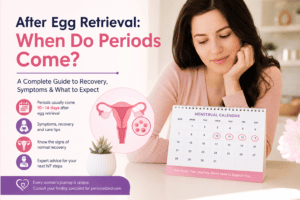
In most women, the first period arrives within 10 to 14 days after egg retrieval, especially if pregnancy has not occurred and there was no fresh embryo transfer.
However, your menstrual cycle may vary depending on:
- Your hormone medications
- Your natural cycle
- Whether embryos were transferred
- Your ovarian response
- Underlying fertility conditions
If you had only egg retrieval and embryo freezing, your period commonly begins about two weeks later.
3. Why Does the Timing Vary?
No two IVF journeys are identical.
During IVF, hormone injections temporarily change your body’s normal cycle.
These medications:
- Stimulate multiple follicles
- Increase estrogen levels
- Trigger ovulation artificially
- Temporarily suppress natural hormones
Once these hormones leave your system, your body gradually returns to its normal rhythm.
That’s why one woman may get her period after 10 days, while another may wait 16 days.
4. Factors That Affect Your First Period
Several factors influence when your period returns.
Hormone Trigger Shot
The trigger injection plays a major role.
Different trigger medications leave the body at different speeds.
PCOS
Women with polycystic ovary syndrome may experience slightly irregular recovery because their cycles are already unpredictable.
Ovarian Response
Women who produced many eggs often have larger ovaries after retrieval.
Recovery may take a little longer.
Hormonal Medications
Progesterone supplements can delay bleeding until the medication is stopped.
Individual Hormone Balance
Every woman’s hormones recover at their own pace.
5. What Will Your First Period Be Like?
Many women notice that their first period after egg retrieval feels different.
It may be:
- Heavier than usual
- Lighter than expected
- Longer lasting
- More crampy
- Associated with small clots
This usually happens because the uterine lining developed under high hormone levels.
Fortunately, most women return to their regular menstrual pattern by the second cycle.
6. Signs Your Body Is Recovering Normally
Recovery generally follows a predictable pattern.
You may notice:
- Reduced bloating
- Less pelvic discomfort
- Improved energy
- Normal appetite
- Decreasing spotting
Your ovaries gradually shrink back to their normal size.
Most women feel significantly better within one week.
7. When Should You Contact Your Fertility Doctor?
Although mild discomfort is expected, some symptoms require immediate medical attention.
Contact your fertility clinic if you experience:
- Severe abdominal pain
- Heavy bleeding soaking multiple pads
- Difficulty breathing
- Persistent vomiting
- High fever
- Rapid weight gain
- Severe bloating
These symptoms may indicate ovarian hyperstimulation syndrome (OHSS), which requires prompt evaluation.
Never ignore symptoms that seem unusually severe.
8. Recovery Tips After Egg Retrieval
Healing doesn’t require complicated treatments.
Simple steps make recovery easier.
Stay Hydrated
Drink plenty of water throughout the day.
Eat Healthy Foods
Focus on:
- Protein-rich meals
- Fresh fruits
- Vegetables
- Whole grains
Avoid Heavy Exercise
Skip strenuous workouts until your doctor approves.
Walking is usually sufficient.
Get Enough Rest
Your body has worked hard.
Allow yourself time to recover.
Take Medicines as Prescribed
Never stop prescribed medications without medical advice.
9. Can Egg Retrieval Delay Future Cycles?
Usually, no.
For most women:
- First cycle may vary
- Second cycle becomes more regular
- Long-term menstrual health remains unchanged
If your periods remain absent for more than six weeks, speak with your fertility specialist.
10. What Happens If You Had a Fresh Embryo Transfer?
The situation changes slightly after a fresh embryo transfer.
If pregnancy occurs:
- Your period will not come.
Instead, you’ll undergo a pregnancy blood test approximately two weeks after embryo transfer.
If pregnancy does not occur, bleeding usually starts after stopping progesterone support.
11. What If You’re Preparing for Frozen Embryo Transfer?
Many IVF clinics now prefer frozen embryo transfers because they allow the body to recover before pregnancy.
Once your first period begins:
- Your doctor evaluates the uterus
- Hormones are checked
- The transfer cycle is planned
Your period acts as the starting point for the next treatment phase.
12. Common Myths About Periods After Egg Retrieval
Myth 1: A Late Period Means Something Is Wrong
Not necessarily.
Hormone levels recover differently in every woman.
Myth 2: Heavy Bleeding Is Always Dangerous
The first period is often heavier due to hormone stimulation.
However, excessive bleeding should still be evaluated.
Myth 3: Egg Retrieval Damages Fertility
False.
Egg retrieval collects mature eggs that your body would naturally lose during that cycle.
It does not reduce your future fertility.
Myth 4: Pain Means Something Went Wrong
Mild pain and bloating are common during recovery.
Persistent or severe pain should be assessed by your doctor.
13. Emotional Changes During Recovery
IVF isn’t just physically demanding—it can also affect your emotions.
Many women experience:
- Mood swings
- Anxiety
- Impatience
- Hope
- Disappointment
These feelings are completely understandable.
Talking with your partner, family, counselor, or fertility team can make the journey less overwhelming.
Remember, recovery involves both the body and the mind.
14. When Can You Resume Normal Activities?
Most women return to:
- Office work within 1–2 days
- Light household work after 24 hours
- Exercise after medical approval
- Sexual activity after the doctor confirms recovery
Always follow your fertility specialist’s recommendations, especially if your ovaries remain enlarged.
15. Final Thoughts
Wondering after egg retrieval when periods come is completely normal. In most cases, your first menstrual period arrives within 10 to 14 days, although slight variations are common depending on your treatment plan and hormone levels. The first cycle may be heavier or more uncomfortable than usual, but this often settles by the following month.
During recovery, listen to your body, stay hydrated, eat nutritious foods, and avoid overexertion. If you experience severe pain, excessive bleeding, or symptoms of ovarian hyperstimulation syndrome (OHSS), seek medical attention without delay.
Every IVF journey is unique, and personalized guidance is essential. Working with the best IVF Doctor in Delhi NCR can help ensure safe recovery, answer your concerns, and prepare you for the next step in your fertility treatment with confidence.
Frequently Asked Questions (FAQs)
1. After egg retrieval when periods come?
Most women get their first period 10 to 14 days after egg retrieval, although timing can vary depending on medications and individual hormone recovery.
2. Is it normal for the first period after egg retrieval to be heavy?
Yes. Many women experience a heavier or longer first period because of the hormonal stimulation used during IVF.
3. Can egg retrieval delay my next menstrual cycle?
A slight delay can occur in the first cycle, but most women return to their regular menstrual pattern within one or two cycles.
4. Should I worry if I don’t get my period after two weeks?
Not always. Hormone medications can delay menstruation. However, if your period hasn’t started after several weeks or you have concerning symptoms, contact your fertility specialist.
5. When can I start the next IVF step after my period?
If you’re planning a frozen embryo transfer, your fertility clinic usually begins preparing the next treatment cycle after your first period and a follow-up evaluation.