Introduction
Endometriosis is a condition that can affect a woman’s periods, daily life, pelvic health, and fertility. For some women, getting pregnant may take longer because endometriosis can affect the ovaries, fallopian tubes, pelvic tissues, or the normal anatomy of the reproductive organs.
But does having endometriosis mean you cannot become a mother? Absolutely not. Many women with endometriosis conceive naturally or with fertility treatment. The right approach depends on factors such as age, ovarian reserve, severity of endometriosis, previous treatment, duration of infertility, and the condition of the fallopian tubes and sperm.
If you are considering fertility treatment, consulting an experienced fertility specialist can help you understand your options. A best IVF Doctor in Delhi NCR can assess your individual situation and explain whether natural conception, IUI, IVF, surgery, or another approach may be appropriate.
Table of Contents
| Sr# | Headings |
|---|---|
| 1 | What Is Endometriosis? |
| 2 | Can Endometriosis Lead to Infertility? |
| 3 | What Are the Symptoms of Endometriosis? |
| 4 | How Does Endometriosis Affect Fertility? |
| 5 | Can Women With Endometriosis Get Pregnant? |
| 6 | When Is It Necessary for Women to Visit an IVF Specialist? |
| 7 | Is IVF Done for Women Who Suffer From Endometriosis? |
| 8 | Does Endometriosis Decrease the Chances of Successful IVF? |
| 9 | Do Cysts Formed Due to Endometriosis Affect IVF? |
| 10 | Is Surgery Prior to IVF Done for Women With Endometriosis? |
| 11 | Can Endometriosis Be Cured Once and for All? |
| 12 | What Is the Process Involved in IVF for Women With Endometriosis? |
| 13 | Is Age a Concern in Women With Endometriosis? |
| 14 | Can Endometriosis Affect Pregnancy? |
| 15 | Endometriosis and IVF: Frequently Asked Questions |
1. What Is Endometriosis?
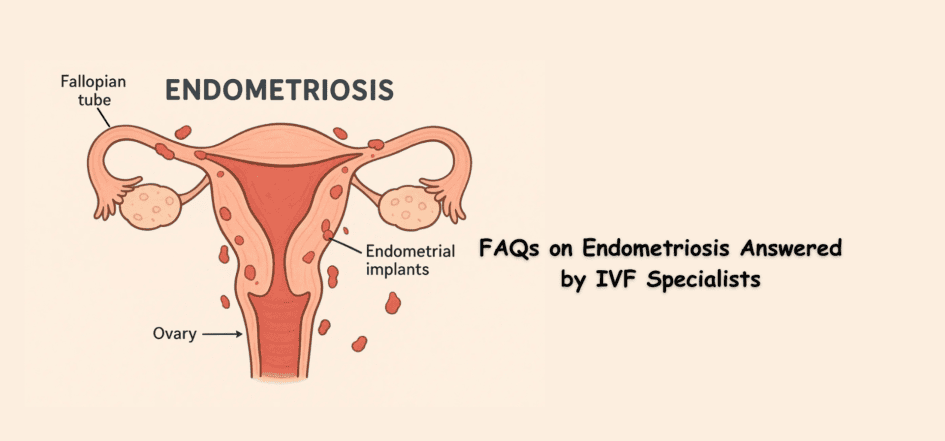
Endometriosis is a condition in which tissue similar to the lining of the uterus grows outside the uterus. It may affect areas such as the ovaries, fallopian tubes, bladder, bowel, and other parts of the pelvis.
This tissue responds to hormonal changes during the menstrual cycle. Because it is located outside the uterus, it can cause inflammation, irritation, scar tissue, and sometimes ovarian cysts called endometriomas.
Some women have mild symptoms, while others experience significant pain or fertility problems.
2. Can Endometriosis Lead to Infertility?
There is a connection between endometriosis and infertility, but having endometriosis does not necessarily mean that a woman will be unable to become pregnant.
There are several possible reasons why endometriosis may affect fertility. It can contribute to inflammation, scar tissue, ovarian endometriomas, pelvic adhesions, and changes in the normal anatomy of the reproductive organs.
The female reproductive system can be compared to a carefully organized transport system. The ovaries release eggs, the fallopian tubes provide a pathway, and sperm must reach the egg at the right time. Endometriosis can sometimes interfere with this normal arrangement.
However, every case is different.
Some women with endometriosis become pregnant naturally, while others may require fertility treatment such as IUI or IVF.
3. What Are the Symptoms of Endometriosis?
Some common signs and symptoms of endometriosis include:
- Painful periods or pelvic pain
- Pain during or after sexual intercourse
- Pain when passing urine or having a bowel movement
- Very heavy menstrual periods
- Persistent tiredness or fatigue
- Difficulty becoming pregnant
Some people think of endometriosis simply as a condition that makes periods uncomfortable. However, it can affect much more than menstruation.
For women who want to have children, understanding the possible relationship between endometriosis and fertility is particularly important.
4. How Does Endometriosis Affect Fertility?
Several factors may contribute to infertility in women with endometriosis.
Pelvic Adhesions
Endometriosis may cause adhesions and scar tissue to develop within the pelvis. These adhesions can cause reproductive organs to stick together or alter their normal position.
In some cases, they may interfere with the fallopian tubes or the movement of the egg.
Ovarian Cysts
Endometriosis can affect the ovaries and lead to the formation of endometriomas, sometimes called chocolate cysts.
Depending on their size, location, and other factors, endometriomas may affect ovarian function and can also influence decisions about fertility treatment.
Inflammation
Endometriosis is associated with inflammation within the pelvic environment. This may affect reproductive processes, although the exact relationship between inflammation and fertility is complex.
Changes in Pelvic Anatomy
Advanced endometriosis can alter the normal position of the ovaries, uterus, fallopian tubes, and surrounding tissues.
For this reason, fertility evaluation should consider other possible causes of infertility rather than assuming that endometriosis is the only factor.
5. Can Women With Endometriosis Get Pregnant?
Yes, women with endometriosis can become pregnant naturally.
Having endometriosis does not automatically mean that IVF will be required.
The likelihood of natural conception can depend on several factors, including:
- Age
- Duration of infertility
- Extent of endometriosis
- Ovarian reserve
- Fallopian tube health
- Sperm quality
- Previous pelvic surgery
- Presence of an ovarian endometrioma
If a fertility evaluation suggests that the chance of natural conception is reasonable, a specialist may recommend trying to conceive without immediate medical intervention.
However, women with known or suspected endometriosis may benefit from earlier fertility evaluation, particularly when age or other fertility factors are a concern.
6. When Is It Necessary for Women to Visit an IVF Specialist?
Many women with endometriosis do not immediately require assistance from an infertility or IVF specialist.
However, a fertility evaluation may be beneficial if you have endometriosis and:
- Are over 35 and are having difficulty conceiving
- Have severe or advanced endometriosis
- Have an ovarian endometrioma
- Have previously undergone surgery for endometriosis
- Have blocked or damaged fallopian tubes
- Have reduced ovarian reserve
- Have previously undergone fertility treatment
- Have been trying to conceive without success
A fertility specialist can review your medical history, perform appropriate tests, and explain the available options.
The goal is not simply to recommend IVF. The goal is to understand all possible ways to achieve pregnancy while protecting your fertility.
7. Is IVF Done for Women Who Suffer From Endometriosis?
IVF may be recommended for some women with endometriosis-related infertility, but it is not automatically required for everyone.
The treatment decision may depend on:
- Age
- Stage and extent of endometriosis
- Ovarian reserve
- Duration of infertility
- Fallopian tube condition
- Previous surgery
- Previous fertility treatment
- Sperm quality
- Other fertility factors
The ESHRE guideline on endometriosis emphasizes individualized treatment for women with endometriosis and infertility.
For women with more advanced disease or previous unsuccessful fertility treatment, assisted reproductive techniques such as IVF may become an important treatment option.
8. Does Endometriosis Decrease the Chances of Successful IVF?
It is a misconception that endometriosis always negatively affects IVF outcomes.
Women with endometriosis may require assisted reproduction, but IVF outcomes can be influenced by many factors beyond endometriosis itself.
These may include:
- Age
- Ovarian reserve
- Extent of endometriosis
- Egg and embryo factors
- Sperm quality
- Uterine health
- Previous fertility treatment
Therefore, rather than asking only, “What is the IVF success rate for endometriosis?”, it may be more useful to ask:
“What factors in my individual case could affect my chances of IVF success?”
A fertility specialist can assess these factors and develop a treatment plan based on your individual circumstances.
9. Do Cysts Formed Due to Endometriosis Affect IVF?
An endometrioma is an ovarian cyst associated with endometriosis.
The presence of an endometrioma does not automatically mean that it must be removed before IVF.
In some situations, surgery may affect ovarian tissue and potentially reduce ovarian reserve. Therefore, removing an endometrioma before IVF should be considered carefully.
Factors that may influence the decision include:
- Size of the endometrioma
- Symptoms
- Imaging findings
- Previous ovarian surgery
- Ovarian reserve
- Accessibility of follicles during egg retrieval
- Possibility of another diagnosis
- Fertility goals
For these reasons, the decision to remove an endometrioma should be individualized for each patient.
10. Is Surgery Prior to IVF Done for Women With Endometriosis?
Surgery is not routinely required before IVF simply because a woman has endometriosis.
There are situations where surgery may be appropriate, including certain cases involving:
- Advanced endometriosis
- Large or symptomatic endometriomas
- Significant pelvic pain
- Anatomical problems affecting fertility
- Suspicion of another condition
However, routine removal of endometriomas before assisted reproduction is not recommended for every patient.
Ovarian reserve should also be considered because repeated or extensive ovarian surgery may affect ovarian function.
In some cases, it may be beneficial for a fertility specialist and an endometriosis specialist to work together to determine the most appropriate treatment approach.
11. Can Endometriosis Be Cured Once and for All?
Endometriosis is a chronic condition and may recur after treatment.
Surgery and medical treatment can help manage symptoms and disease, but recurrence is possible.
The long-term management plan should consider:
- Symptoms
- Extent and location of endometriosis
- Age
- Fertility goals
- Previous treatments
- Previous surgery
- Ovarian reserve
For women who want to become pregnant, reproductive plans should be considered when deciding how and when to treat endometriosis.
12. What Is the Process Involved in IVF for Women With Endometriosis?
The basic IVF process is generally similar for women with and without endometriosis. However, the treatment plan is individualized according to the woman’s reproductive history and fertility assessment.
Fertility Evaluation
A fertility specialist may evaluate:
- Ovarian reserve
- Uterine health
- Fallopian tube condition
- Sperm quality
- Previous fertility treatments
- Extent and location of endometriosis
- Presence of endometriomas or adhesions
- Previous pelvic surgery
Evaluation of Endometriosis
The specialist may consider whether endometriomas, adhesions, or other changes caused by endometriosis could affect fertility treatment.
Ovarian Stimulation
Fertility medications are used to stimulate the ovaries so that multiple eggs can develop.
Egg Retrieval
Once the eggs are mature, they are collected during an egg retrieval procedure, generally under appropriate sedation or anesthesia.
Fertilization
The collected eggs are fertilized with sperm in the laboratory. In certain situations, ICSI may be recommended based on sperm factors or previous fertilization results.
Embryo Development
The fertilized eggs develop into embryos, which are monitored in the laboratory.
Embryo Transfer
Depending on the individualized treatment plan, an appropriate embryo may be transferred into the uterus.
The exact IVF protocol can vary considerably between patients.
13. Is Age a Concern in Women With Endometriosis?
Yes. Age is an important consideration when evaluating fertility in women with endometriosis.
Female fertility naturally changes with age. Endometriosis may add additional fertility considerations, particularly when ovarian reserve is reduced or previous ovarian surgery has been performed.
This does not mean that every woman with endometriosis needs immediate IVF. Instead, it means that fertility planning should not be unnecessarily delayed.
The appropriate approach may involve:
- Trying to conceive naturally
- IUI
- IVF
- Fertility preservation
- Surgery in selected circumstances
The decision should be based on an individual’s age, ovarian reserve, reproductive goals, endometriosis characteristics, and other fertility factors.
14. Can Endometriosis Affect Pregnancy?
Women with endometriosis can become pregnant and have healthy pregnancies.
However, studies have reported associations between endometriosis and certain pregnancy complications. These may include preterm birth and some placental or pregnancy-related complications.
This does not mean that every woman with endometriosis will experience pregnancy complications.
Once pregnancy occurs, appropriate prenatal care and monitoring can help your obstetric team manage your pregnancy according to your individual medical history.
15. Endometriosis and IVF: Frequently Asked Questions
What is endometriosis?
Endometriosis occurs when tissue similar to the lining of the uterus grows outside the uterus. It may affect the ovaries, fallopian tubes, bladder, bowel, and other areas.
Can I get pregnant with endometriosis?
Yes. Women with endometriosis may become pregnant naturally or with fertility treatment. The likelihood depends on factors such as age, disease severity, ovarian reserve, tubal health, sperm quality, and other fertility factors.
What treatment options are available for pregnancy with endometriosis?
Depending on the individual situation, options may include trying naturally, surgery, IUI, IVF, or fertility preservation.
Should an endometrioma be removed before IVF?
Not necessarily. Removing an endometrioma before IVF does not automatically improve pregnancy outcomes, and ovarian surgery may affect ovarian reserve. The decision should consider the size and symptoms of the endometrioma, ovarian reserve, previous surgery, accessibility during egg retrieval, and overall fertility goals.
Can endometriosis return after surgery?
Yes. Endometriosis can recur after surgical treatment. Long-term management should consider the woman’s symptoms, characteristics of the disease, fertility plans, and previous treatments.
When should I seek evaluation by an IVF specialist if I have endometriosis?
Women with endometriosis may benefit from an earlier fertility evaluation, particularly if they are having difficulty conceiving, have advanced disease, an endometrioma, previous pelvic surgery, reduced ovarian reserve, or other fertility concerns.
Women aged 35 or older may also benefit from earlier evaluation because age is an important factor in fertility planning.
Conclusion
Endometriosis does not mean that pregnancy is impossible. Some women conceive naturally, while others may require IUI, IVF, surgery, fertility preservation, or a combination of treatments.
The most appropriate approach depends on age, ovarian reserve, severity of endometriosis, presence of endometriomas, fallopian tube health, sperm quality, previous treatment, and individual reproductive goals.
If you have endometriosis and are planning pregnancy, consulting an experienced fertility specialist can help you understand your options and decide on the next appropriate step.