1. Introduction
While IVF is exciting, it can also bring concerns, especially about potential risks. One complication that patients may encounter during IVF is ovarian hyperstimulation syndrome (OHSS).
OHSS occurs when the ovaries respond too strongly to fertility medicines. Mild cases may cause discomfort, bloating, and nausea. More severe cases can cause fluid to accumulate in the abdomen and, in some cases, around the lungs, potentially affecting the kidneys, lungs, heart, and circulation.
With advances in fertility treatment, careful monitoring and individualized treatment strategies can significantly reduce the risk of serious OHSS.
The most important step is to recognize warning signs early and seek appropriate medical care promptly. If you are considering IVF, choosing an experienced fertility specialist can help you understand your individual risk and how it may affect both your safety and treatment outcomes.
2. OHSS Explained
Ovarian hyperstimulation syndrome (OHSS) is a condition caused by an excessive response of the ovaries to fertility medicines used during assisted reproductive treatment.
During IVF, fertility medicines are given to stimulate the ovaries so that multiple follicles can develop. This allows several eggs to mature, increasing the opportunity to collect eggs for IVF.
But what happens when the ovaries respond more strongly than expected?
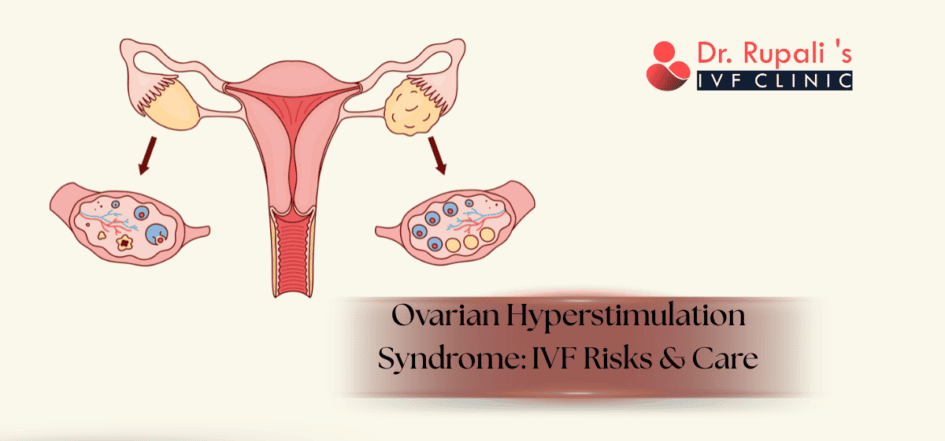
The ovaries may become enlarged, while changes in the blood vessels can cause fluid to move into surrounding tissues. This can result in fluid accumulation in the abdomen and, in severe cases, around the lungs.
A simple way to understand this is to think of ovarian stimulation like watering a garden. The right amount of water helps plants grow. However, too much water can create problems. Similarly, the right amount of ovarian stimulation can support IVF, while excessive stimulation may increase the risk of OHSS.
Most cases of OHSS are mild and can be managed with monitoring and supportive care. However, severe OHSS may require hospitalization and specialist treatment.
3. Why Does OHSS Happen During IVF?
During IVF, fertility medicines stimulate the ovaries so that multiple follicles can develop. In some patients, the ovaries respond excessively to this stimulation.
One important factor associated with OHSS is human chorionic gonadotropin (hCG), which may be used as a trigger injection to help mature the eggs before egg retrieval.
In susceptible patients, hCG can contribute to changes in ovarian blood vessels, allowing fluid to leak into surrounding areas.
This may result in:
- Abdominal bloating
- Abdominal pain or discomfort
- Fluid accumulation
- Nausea
- Vomiting
- Reduced urine output
- Difficulty breathing in severe cases
OHSS can occur even when an IVF cycle has been carefully planned and monitored. It does not necessarily mean that a mistake was made during treatment.
The more important question is not simply whether OHSS can occur. Instead, patients should ask:
What is my individual risk, and how will my fertility team identify, prevent, and manage that risk?
4. What Are the Types of OHSS?
OHSS is generally classified according to the severity of symptoms and laboratory findings.
Mild OHSS
Symptoms of mild OHSS may include:
- Bloating
- Mild abdominal pain or discomfort
- Nausea
- Enlarged ovaries
Most mild cases improve with appropriate monitoring and supportive care.
Moderate OHSS
Moderate OHSS may involve:
- Increased abdominal pain
- More significant bloating
- Vomiting
- Accumulation of fluid in the abdomen
Patients with moderate OHSS may require closer clinical monitoring, blood tests, and ultrasound examinations.
Severe OHSS
Severe OHSS can involve:
- Large amounts of fluid accumulating in the abdomen
- Severe abdominal pain
- Persistent vomiting
- Very low urine output
- Dehydration
- Difficulty breathing
- Abnormal blood test results
- Increased risk of blood clots
Severe OHSS may require hospitalization and close medical supervision.
Critical OHSS
Critical OHSS is rare but can cause serious complications, including:
- Kidney failure
- Blood clots
- Severe breathing difficulties
- Major fluid and electrolyte disturbances
- Serious circulatory problems
This form requires urgent medical management.
5. What Are the Symptoms of OHSS?
Knowing the symptoms of OHSS is very important for patient safety during IVF.
Some mild abdominal discomfort and bloating can occur after egg retrieval. However, symptoms that become severe or progressively worse should not be ignored.
Common symptoms include:
- Increasing abdominal size
- Abdominal pain
- Nausea
- Vomiting
- Diarrhea
- Enlarged or tender ovaries
- Increasing waist size
More concerning symptoms may include:
- Rapid weight gain
- Increasing abdominal pain
- Persistent or uncontrollable vomiting
- Difficulty breathing
- Very little urine
- Dark urine
- Excessive thirst
- Pain or swelling in the legs
- Chest pain
A rapid increase in body weight over a short period, particularly when accompanied by increasing abdominal swelling or reduced urine output, should be discussed promptly with your fertility team.
If you develop concerning symptoms during fertility treatment, contact your treatment team rather than waiting for the symptoms to disappear on their own.
6. Who Is at Higher Risk of OHSS?
Although OHSS can occur in different patients, certain factors may increase the risk.
Polycystic Ovary Syndrome (PCOS)
Patients with PCOS may have a larger number of follicles and may respond strongly to ovarian stimulation. This can increase their risk of OHSS.
Previous OHSS
If you have experienced OHSS during a previous fertility treatment cycle, you may have an increased risk during future cycles.
High Ovarian Reserve
A high number of developing follicles or elevated anti-Müllerian hormone (AMH) levels may be associated with an increased risk.
Large Number of Follicles
Developing a particularly large number of follicles during stimulation can increase the likelihood of excessive ovarian response.
High or Rapidly Increasing Estradiol Levels
Estradiol levels can provide information about how strongly the ovaries are responding to stimulation. Rapidly increasing or very high levels may indicate an increased risk in some patients.
The American Society for Reproductive Medicine (ASRM) identifies factors such as PCOS, elevated AMH, and a high expected number of eggs as important OHSS risk factors.
This is why IVF treatment should not follow a one-size-fits-all approach. Your medication and monitoring plan should be based on your individual response.
7. When Does OHSS Usually Occur?
The timing of OHSS can vary from one patient to another.
Early-onset OHSS usually develops several days after the hCG trigger used during IVF. According to ASRM, early OHSS typically begins around 4 to 7 days after the trigger.
Late-onset OHSS is associated with pregnancy and the increase in hCG produced by the developing pregnancy. It can occur later and may last longer.
Symptoms may improve within the first week in many patients. However, when pregnancy occurs, OHSS may persist or become more severe because hCG levels continue to rise.
Therefore, follow-up after IVF remains important, even after egg retrieval or embryo transfer has been completed.
8. How Is Ovarian Hyperstimulation Syndrome Diagnosed?
OHSS is diagnosed by considering the patient’s symptoms together with physical examination findings, ultrasound results, and laboratory tests.
Physical Examination
A doctor may assess:
- Abdominal distension
- Changes in body weight
- Abdominal tenderness
- Blood pressure
- Pulse
- Signs of dehydration
- Overall clinical condition
Ultrasound
An ultrasound may show enlarged ovaries and fluid accumulation in the abdomen.
Laboratory Tests
Blood tests may be performed to:
- Assess hydration
- Measure electrolytes
- Evaluate blood concentration
- Check kidney function
- Identify abnormalities associated with severe OHSS
Your doctor may also monitor the amount of urine you produce.
Together, these assessments help determine whether OHSS is mild, moderate, or severe and whether home monitoring is appropriate or hospitalization is required.
9. How Is OHSS Treated?
There is no single medication that immediately cures OHSS. Treatment focuses on supporting the body while it recovers and preventing complications.
Mild OHSS
Mild OHSS may often be managed at home under medical guidance.
Your fertility team may recommend:
- Fluid intake as advised
- Regular weight monitoring
- Monitoring abdominal swelling
- Monitoring urine output
- Appropriate pain management
- Regular clinical follow-up
You may also be advised to avoid strenuous physical activity and sexual intercourse while the ovaries remain enlarged. This can help reduce the risk of ovarian injury or other complications.
Moderate OHSS
Moderate OHSS may require:
- More frequent clinical visits
- Ultrasound monitoring
- Blood tests
- Close monitoring of fluid balance
If significant fluid accumulates in the abdomen, a procedure called paracentesis may sometimes be performed to remove the excess fluid. This may help relieve abdominal pressure and improve breathing or kidney function.
Severe OHSS
Severe OHSS may require hospitalization.
Treatment may include:
- Intravenous fluids
- Kidney function monitoring
- Electrolyte monitoring
- Medication to reduce the risk of blood clots when indicated
- Drainage of abdominal fluid when necessary
- Treatment for breathing difficulties
- Management of other complications
The treatment plan depends on the patient’s symptoms, laboratory results, pregnancy status, and overall health.
10. When Is OHSS an Emergency?
This is one of the most important sections for anyone undergoing IVF.
Seek urgent medical attention if you experience:
- Difficulty breathing
- Chest pain
- Severe abdominal pain
- Very little or no urine
- Rapid or excessive weight gain
- Persistent vomiting
- Severe dehydration
- Fainting
- Leg pain or swelling
- Severe abdominal swelling
These symptoms may indicate potentially serious complications, including blood clots, kidney problems, or fluid accumulation around the lungs.
Do not try to determine the severity of OHSS yourself. If you are concerned about your symptoms, contact your fertility clinic or seek urgent medical care.
11. Can OHSS Be Prevented During IVF?
Fortunately, modern IVF provides several strategies that can help reduce the risk of moderate and severe OHSS.
Individualized Ovarian Stimulation
Your fertility specialist can adjust medication doses according to your ovarian reserve, previous response, age, AMH level, PCOS status, and other relevant factors.
The goal is not simply to produce the highest possible number of eggs. The goal is to achieve an effective IVF outcome while protecting your health.
Careful Monitoring
Regular ultrasounds and, when appropriate, hormone testing can help your doctor understand how your ovaries are responding.
This allows treatment to be adjusted when necessary.
Alternative Trigger Strategies
For patients at increased risk of OHSS, a GnRH agonist trigger may be considered instead of an hCG trigger in appropriate treatment protocols.
Freeze-All Strategy
For selected high-risk patients, the fertility team may recommend freezing suitable embryos and transferring them in a later cycle.
ASRM recommends considering a freeze-only strategy for patients at increased risk because avoiding a fresh embryo transfer can significantly reduce the risk of moderate-to-severe OHSS.
Preventive Medicines
Depending on your individual circumstances, your fertility specialist may consider preventive medicines, including dopamine agonists, to reduce OHSS risk.
The appropriate preventive strategy depends on your medical history and response to ovarian stimulation.
12. Does OHSS Impact Pregnancy?
Developing OHSS does not automatically mean that IVF has failed.
However, if pregnancy occurs, the pregnancy itself can increase hCG levels. This may make OHSS worse or prolong the condition.
For this reason, patients who become pregnant after developing OHSS may require closer monitoring.
Severe OHSS can pose health risks to the mother, including:
- Dehydration
- Blood clots
- Kidney problems
- Breathing difficulties
- Fluid and electrolyte disturbances
Pregnancy following OHSS may also be associated with certain pregnancy complications, including an increased risk of pre-eclampsia and premature birth.
Your doctor will determine how frequently you need monitoring based on your individual symptoms and pregnancy status.
13. How Can You Reduce the Risks During an IVF Cycle?
You cannot control every factor associated with OHSS, but you can actively participate in your treatment and risk reduction.
Before Starting IVF
- Tell your doctor if you have experienced OHSS previously.
- Discuss your AMH and ovarian reserve.
- Inform your doctor about PCOS and other reproductive conditions.
- Ask for an assessment of your individual OHSS risk.
- Understand which symptoms require an immediate call to your clinic.
During Ovarian Stimulation
- Attend all recommended ultrasound appointments.
- Complete blood tests according to your treatment protocol.
- Take medications exactly as prescribed.
- Never change your medication dose without medical advice.
- Tell your fertility team about any unusual symptoms.
After Egg Retrieval or Embryo Transfer
Follow your clinic’s instructions carefully.
Keep track of:
- Increasing abdominal bloating
- Rapid weight changes
- Urine output, if your doctor recommends monitoring it
- Increasing pain
- Vomiting or difficulty keeping fluids down
- Breathing difficulties
If your symptoms become worse, contact your fertility team promptly.
Communication is key. You should feel comfortable asking questions throughout your IVF journey.
14. Choosing the Right IVF Specialist
If you are searching for the best IVF doctor in new delhi, look beyond online reviews and published success rates.
One of the most important factors is whether your fertility specialist prioritizes patient safety, individualized treatment, and careful monitoring.
A good fertility specialist should provide:
- An explanation of your individual OHSS risk factors
- A clear reason for the medicines being prescribed
- An explanation of how your ovarian response will be monitored
- A plan for managing an excessive ovarian response
- Information about OHSS prevention
- Clear instructions about symptoms requiring urgent care
- An explanation of whether a freeze-all approach may be appropriate
- A treatment plan customized to your individual response to stimulation
The goal should not simply be to maximize the number of eggs retrieved.
The goal is to find the right balance between effective ovarian stimulation, embryo development, pregnancy chances, and patient safety.
15. Conclusion
Ovarian hyperstimulation syndrome can understandably make IVF patients anxious. However, learning about the symptoms, risk factors, prevention strategies, and treatment options can help you make informed decisions throughout your fertility journey.
Most cases of OHSS are mild and can be managed through monitoring and supportive care. Severe OHSS is uncommon but can have serious consequences, which is why individualized stimulation, careful monitoring, and appropriate preventive measures are so important.
Before starting IVF, discuss your personal OHSS risk with your fertility specialist. Choosing an experienced fertility professional and maintaining open communication throughout treatment can help make the IVF process safer and more manageable.
16. Frequently Asked Questions About OHSS
1. What is Ovarian Hyperstimulation Syndrome in IVF?
Ovarian Hyperstimulation Syndrome (OHSS) is a complication that can occur when the ovaries respond excessively to fertility medicines used during IVF. The ovaries may become enlarged, and fluid can leak from blood vessels into the abdomen. Symptoms can range from mild discomfort and bloating to severe complications requiring hospital care.
2. What are the symptoms of severe OHSS?
Symptoms of severe OHSS may include rapid weight gain, significant abdominal pain or swelling, persistent nausea or vomiting, reduced urine output, difficulty breathing, leg pain or swelling, and chest pain. These symptoms require prompt medical evaluation because severe OHSS can lead to serious complications.
3. Can Ovarian Hyperstimulation Syndrome be prevented?
The risk of OHSS can often be reduced through individualized ovarian stimulation, careful monitoring, appropriate trigger strategies, and embryo freezing for selected high-risk patients. Your fertility specialist can determine which prevention strategies are appropriate for you.
4. Does OHSS mean that IVF has failed?
No. Developing OHSS does not mean that IVF has failed. However, if pregnancy occurs, rising hCG levels can sometimes worsen or prolong OHSS. Your fertility specialist can monitor the condition and provide appropriate care.
5. How do I select the best IVF doctor in New Delhi to minimize my risk of OHSS?
Look for a fertility specialist who provides individualized ovarian stimulation, regular monitoring, clear communication, and evidence-based OHSS prevention strategies. Ask about your personal risk, how excessive ovarian response will be managed, whether a freeze-all strategy could be appropriate, and what emergency support is available if severe symptoms develop.