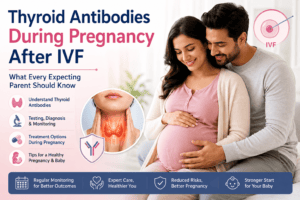
Thyroid Antibodies During Pregnancy After IVF: What Every Expecting Parent Should Know
For many couples, conceiving after IVF is a life-changing milestone. While this achievement brings immense joy, it also means closer medical monitoring throughout pregnancy. One topic that often surprises parents-to-be is thyroid antibodies.
If your fertility specialist or obstetrician mentions thyroid antibodies during pregnancy, you may wonder:
- What are thyroid antibodies?
- Why are they important?
- Will they affect my pregnancy or baby?
The reassuring news is that having thyroid antibodies does not automatically make your pregnancy high-risk. Many women with thyroid antibodies go on to have healthy pregnancies and deliver healthy babies.
Your thyroid gland acts like your body’s thermostat, regulating metabolism, energy levels, and hormone balance. During pregnancy, it plays an even more important role because your baby depends on your thyroid hormones for healthy growth, especially during the first trimester.
If thyroid antibodies interfere with thyroid function, your healthcare team may simply monitor you more closely to ensure both you and your baby stay healthy.
Looking for the best IVF doctor in New Delhi? Get expert fertility care, advanced IVF treatments, personalized solutions, and compassionate support to improve your chances of a healthy pregnancy.
Whether you’re planning IVF or are already pregnant after fertility treatment, understanding thyroid antibodies can help you make informed decisions and reduce unnecessary anxiety.
What Are Thyroid Antibodies?
Thyroid antibodies are proteins produced by your immune system. Normally, antibodies protect your body from infections. However, in autoimmune thyroid disease, they mistakenly attack healthy thyroid tissue.
Many women discover they have thyroid antibodies during fertility investigations or early pregnancy—even when their thyroid hormone levels are completely normal.
The two most common thyroid antibodies are:
- Thyroid Peroxidase Antibodies (TPOAb)
- Thyroglobulin Antibodies (TgAb)
Having these antibodies does not always mean you have thyroid disease, but it does indicate a higher risk of developing thyroid dysfunction during pregnancy.
Why Thyroid Health Matters During IVF
Healthy thyroid function is essential for fertility and a successful pregnancy.
A well-functioning thyroid supports:
- Regular ovulation
- Healthy embryo implantation
- Placental development
- Baby’s brain development
- Stable reproductive hormones
Even mild thyroid dysfunction can reduce IVF success, which is why fertility specialists routinely evaluate thyroid health before treatment.
Women with thyroid antibodies may have a slightly increased risk of:
- Implantation failure
- Early miscarriage
- Pregnancy complications
The encouraging news is that most women still achieve successful pregnancies with proper medical care and monitoring.
3 Common Types of Thyroid Antibodies
1. Thyroid Peroxidase Antibodies (TPOAb)
These are the most commonly detected thyroid antibodies during pregnancy.
They are associated with:
- Hashimoto’s thyroiditis
- Increased risk of hypothyroidism
- Higher likelihood of thyroid dysfunction during pregnancy
2. Thyroglobulin Antibodies (TgAb)
These antibodies attack thyroglobulin, a protein involved in thyroid hormone production.
They are commonly seen alongside other autoimmune thyroid disorders.
3. Thyroid-Stimulating Hormone Receptor Antibodies (TRAb)
These antibodies are usually found in Graves’ disease and can lead to:
- Hyperthyroidism
- Rapid fetal heart rate
- Increased pregnancy monitoring
How Thyroid Antibodies Can Affect Pregnancy
Simply having thyroid antibodies does not mean you have thyroid disease.
However, pregnancy places extra demands on the thyroid gland. Women with thyroid antibodies are more likely to develop hypothyroidism during pregnancy.
Possible pregnancy risks include:
- Miscarriage
- Preterm birth
- Pregnancy-induced hypertension
- Placental complications
- Low birth weight
- Postpartum thyroiditis
Fortunately, early diagnosis and appropriate treatment significantly reduce these risks.
Should Every IVF Patient Be Tested?
Many fertility specialists recommend thyroid screening before IVF treatment.
Routine testing may include:
- TSH (Thyroid-Stimulating Hormone)
- Free T4
- TPO antibodies
- Thyroglobulin antibodies
Testing is particularly recommended for women with:
- Multiple IVF failures
- Recurrent miscarriages
- Family history of thyroid disease
- PCOS
- Autoimmune disorders
- Previous thyroid disease
If you’ve experienced repeated fertility challenges, discuss thyroid testing with your IVF specialist before beginning another treatment cycle.
Common Symptoms of Thyroid Problems
Many women with thyroid antibodies experience no symptoms.
However, thyroid dysfunction may cause symptoms.
Symptoms of Hypothyroidism
- Fatigue
- Weight gain
- Constipation
- Dry skin
- Feeling unusually cold
- Depression
- Hair loss
- Slow heart rate
Symptoms of Hyperthyroidism
- Rapid heartbeat
- Excessive sweating
- Tremors
- Anxiety
- Weight loss
- Heat intolerance
Many of these symptoms overlap with normal pregnancy changes, making blood tests the most reliable way to evaluate thyroid health.
Diagnosis and Blood Tests
Your doctor may recommend several blood tests.
TSH Test
Measures how hard your brain is working to stimulate the thyroid gland.
Free T4 Test
Measures the amount of active thyroid hormone circulating in the blood.
TPO Antibody Test
Detects autoimmune thyroid disease.
Thyroglobulin Antibody Test
Provides additional information about thyroid autoimmunity.
TRAb Test
Usually recommended for women with current or previous Graves’ disease.
Because thyroid hormone requirements change during pregnancy, these tests may be repeated several times.
Treatment Options During Pregnancy
Treatment depends primarily on thyroid hormone levels—not simply the presence of antibodies.
Levothyroxine
Women diagnosed with hypothyroidism are usually treated with levothyroxine, which is considered safe during pregnancy.
It helps:
- Maintain normal thyroid hormone levels
- Support healthy fetal development
- Reduce pregnancy complications
Monitoring Without Medication
If thyroid hormone levels remain normal despite positive antibodies, medication may not be necessary.
Instead, your doctor may recommend:
- Blood tests every 4–6 weeks
- Regular TSH monitoring
- Watching for symptoms
Women with Graves’ disease may require different medications that are considered safer during pregnancy.
Treatment is always individualized to protect both mother and baby.
Risks for Mother and Baby
Most women with thyroid antibodies have healthy pregnancies. However, untreated thyroid disease may increase certain risks.
Risks for Mothers
- Miscarriage
- Gestational hypertension
- Preeclampsia
- Placental complications
- Preterm delivery
- Postpartum thyroiditis
Risks for Babies
- Low birth weight
- Growth restriction
- Premature birth
- Developmental problems (mainly if severe maternal hypothyroidism remains untreated)
Early diagnosis and appropriate treatment greatly improve pregnancy outcomes.
Lifestyle Tips to Support Thyroid Health
Lifestyle changes cannot eliminate thyroid antibodies, but they can help support overall thyroid function.
Eat a Balanced Diet
Include:
- Fruits
- Vegetables
- Whole grains
- Lean proteins
- Healthy fats
Get Enough Iodine
Pregnant women require adequate iodine, but never start iodine supplements without medical advice, as too much iodine can also affect thyroid function.
Maintain Healthy Selenium Levels
Some studies suggest selenium may support thyroid health.
Natural food sources include:
- Eggs
- Fish
- Whole grains
- Brazil nuts (in moderation)
Always consult your healthcare provider before taking selenium supplements.
Manage Stress
Reducing stress may help support overall immune health.
Helpful activities include:
- Meditation
- Yoga
- Deep breathing
- Gentle walking
Prioritize Sleep and Avoid Smoking
Good-quality sleep and avoiding smoking benefit both maternal health and your baby’s development.
Regular Monitoring Is Essential
Pregnancy causes major hormonal changes, making regular follow-up especially important.
Your healthcare team may monitor:
- TSH every 4–6 weeks
- Thyroid hormone levels
- Baby’s growth and development
- Blood pressure
- Overall pregnancy progress
Women with thyroid antibodies are also more likely to develop postpartum thyroiditis, so thyroid testing may continue after delivery.
When Should You Talk to an IVF Specialist?
Speak with your fertility specialist if you have:
- Positive thyroid antibodies
- Multiple miscarriages
- Repeated IVF failures
- Previous thyroid disease
- Family history of thyroid disease
- Thyroid-related infertility concerns
A collaborative approach involving both a fertility specialist and an endocrinologist can help optimize your chances of a healthy pregnancy.
Final Thoughts
Thyroid antibodies during pregnancy after IVF can sound concerning, but they are usually manageable with proper medical care.
Many women with thyroid antibodies experience uncomplicated pregnancies and deliver healthy babies.
The key is early testing, regular monitoring, and personalized treatment when needed.
Rather than viewing thyroid antibodies as a barrier to pregnancy, think of them as valuable information that helps your healthcare team provide the best possible care for you and your baby.
If you’re planning IVF or are already pregnant, discuss your thyroid health with your fertility specialist to ensure you receive appropriate screening and follow-up.
Frequently Asked Questions (FAQs)
Can thyroid antibodies affect IVF success?
Yes. Some studies suggest thyroid antibodies may be associated with implantation failure and recurrent miscarriage. However, many women still achieve successful pregnancies with appropriate treatment and monitoring.
Do I need thyroid medication if my thyroid hormones are normal?
Not always. If your thyroid hormone levels and TSH remain within the normal range, medication may not be necessary. Your doctor will decide based on your blood test results and overall pregnancy risk.
Can thyroid antibodies harm my baby?
Thyroid antibodies themselves usually do not harm the baby. The greater concern is untreated thyroid dysfunction, which may affect fetal development. Regular monitoring helps minimize these risks.
How often should thyroid function be checked during pregnancy after IVF?
Most specialists recommend checking thyroid function every 4–6 weeks, especially during the first half of pregnancy or whenever thyroid medication doses need adjustment.
Can thyroid antibodies disappear after pregnancy?
In some women, thyroid antibody levels decrease after childbirth. However, they often remain positive. Your doctor may recommend follow-up thyroid testing after delivery, particularly if you develop symptoms of postpartum thyroiditis.