Pelvic floor dysfunction (PFD) is a common yet often overlooked health condition that affects millions of people worldwide. While many people assume it only affects women after childbirth, the truth is that pelvic floor dysfunction can occur in women, men, and even young adults. It can interfere with daily activities, reduce quality of life, and sometimes impact fertility and pregnancy.
Think of your pelvic floor like a hammock supporting important organs. If the hammock becomes too weak or too tight, it cannot perform its job properly. As a result, problems such as urinary leakage, constipation, pelvic pain, or sexual discomfort may develop.
The good news? Pelvic floor dysfunction is treatable. Early diagnosis, lifestyle changes, physical therapy, and medical treatments can significantly improve symptoms.
For women trying to conceive, pelvic floor health is equally important. Consulting the best IVF Doctor in Delhi NCR can help identify underlying pelvic issues that may affect fertility and pregnancy outcomes.
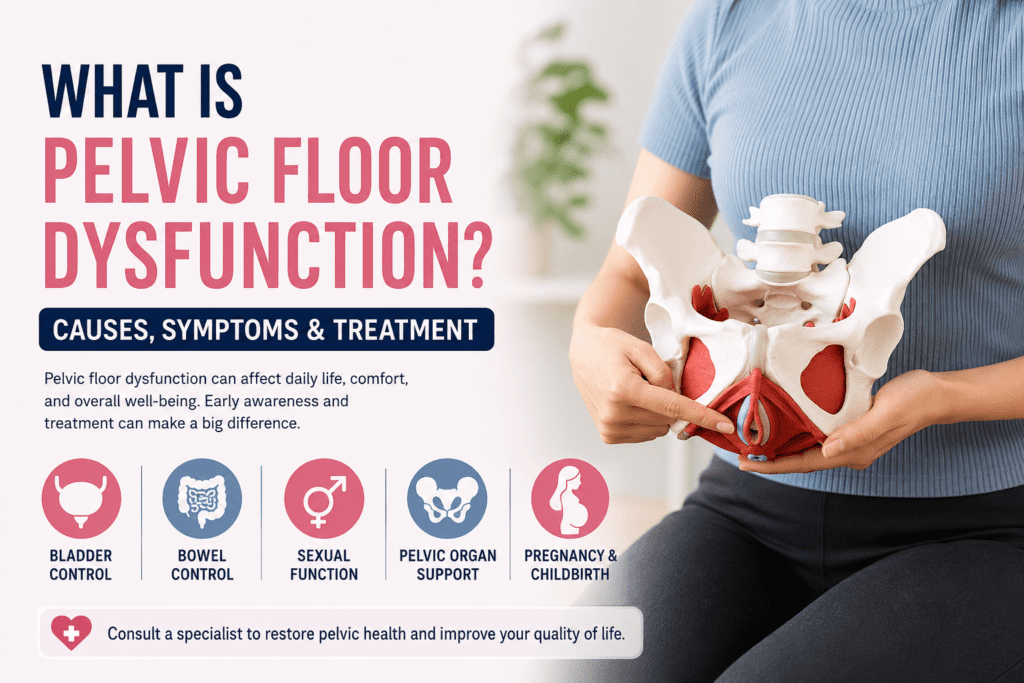
Table of Contents
| Sr# | Headings |
|---|---|
| 1 | Understanding Pelvic Floor Dysfunction |
| 2 | What Is the Pelvic Floor? |
| 3 | How Common Is Pelvic Floor Dysfunction? |
| 4 | Causes of Pelvic Floor Dysfunction |
| 5 | Risk Factors |
| 6 | Symptoms of Pelvic Floor Dysfunction |
| 7 | Types of Pelvic Floor Dysfunction |
| 8 | Diagnosis |
| 9 | Treatment Options |
| 10 | Pelvic Floor Exercises |
| 11 | Lifestyle Changes |
| 12 | Pelvic Floor Dysfunction and Fertility |
| 13 | Prevention Tips |
| 14 | When Should You See a Doctor? |
| 15 | Conclusion |
1. What Is Pelvic Floor Dysfunction?
Pelvic floor dysfunction happens when pelvic floor tissues fail to coordinate. These dysfunctions can affect:
- Bladder control
- Bowel control
- Sexual function
- Support of pelvic organs
- Pregnancy and childbirth
When pelvic floor muscles become weak, tight, or unrelaxed, it causes bodily distress.
2. What Is the Pelvic Floor?
The pelvic floor is a muscular region at the bottom of the pelvis. These muscles are responsible for supporting the:
- Bladder
- Uterus (female)
- Rectum
- Prostate (male)
When the pelvic floor muscles are healthy, they contract and relax during urination, defecation, coughing, laughing, and when lifting heavy objects.
3. How Common Is Pelvic Floor Dysfunction?
Pelvic floor dysfunction affects a lot more people than is commonly accepted.
Studies estimate that at least 1 out of 3 women will experience some type of pelvic floor disorder at some point in their lives.
While pelvic floor disorders are best known to affect women, men can also experience pelvic floor dysfunction due to:
- Post-prostate surgeries
- Chronic constipation
- Injuries to the pelvis
- Lifting heavy objects
- Old age
4. What Are the Causes of Pelvic Floor Dysfunction?
A number of causes can lead to pelvic floor dysfunction.
Pregnancy and Childbirth
Childbirth through the vagina greatly stretches the pelvic muscles.
The muscles can become weakened from having multiple pregnancies.
Old Age
Muscle strength gradually diminishes through the natural process of aging.
Chronic Constipation
Straining to pass a bowel movement can cause pelvic floor muscles to be overstressed.
Heavy Lifting
Lifting heavy objects repeatedly can cause a weakness in pelvic support as abdominal pressure increases.
Obesity
Carrying excess weight can stress the pelvic floor due to constant pressure.
Pelvic Surgery
Procedures that involve the bladder, uterus, and prostate can impact pelvic muscle functionality.
Neurological Conditions
Several conditions can impact the nerve signals to the pelvic muscles, and those include spinal cord injury, Parkinson’s disease, and multiple sclerosis.
Risk Factors
Some groups of people are more susceptible to pelvic floor dysfunction, and those include:
- Women post childbirth
- The elderly
- Those with a persistent cough
- People with obesity
- Heavy lifting athletes
- People with a history of constipation
- Those with a history of pelvic surgery
The Symptoms of Pelvic Floor Dysfunction
The symptoms can vary based on what the problem is. However, the symptoms can be:
Urinary Symptoms
- Urgency
- Leakage
- Retention
Bowel Symptoms
- Constipation
- Incomplete evacuation
Pelvic Pain
- Pain in the pelvis or lower abdomen
- Pain during intercourse
- Discomfort
Pressure or the Feeling of Bulging
Organ prolapse can feel like a heavy, bulging sensation.
Types of Pelvic Floor Dysfunction
Pelvic Floor Dysfunction can be of a few types.
Pelvic Organ Prolapse
This is when the pelvic organs are displaced due to the weakness of the muscles.
Urinary Incontinence
The inability to control the bladder.
Fecal Incontinence
The inability to control bowel movements.
Hypertonic Pelvic Floor
This condition is characterized by constant tightness of the muscles.
Hypotonic Pelvic Floor
This condition is characterized by excessive weakness of the muscles.
Diagnosis
When it comes to pelvic floor dysfunction, there are quite a few tools that can be used for evaluation.
- Clinical history
- Physical evaluation
- Pelvic evaluation
- Imaging
- Ultrasound
- MRI
- Evaluation for bowel and bladder function
- Electromyography (EMG)
The earlier the dysfunction is diagnosed, the better the prognosis can be.
Treatment Options
The nature of the treatment is based on the underlying cause and, most importantly, the severity of the symptoms.
Pelvic Floor Physical Therapy
When it comes to treating pelvic floor disorders, pelvic floor physical therapy is considered a first-line treatment option.
Specialized Physical Therapists teach their patients how to engage and relax the pelvic floor muscles.
Biofeedback Therapy
This therapy is used to train muscle control through the use of sensors.
Medications
Physicians prescribe medications for the following conditions:
- Bladder spasm reduction
- Constipation management
- Pain relief
Electrical Stimulation
This technique is used to stimulate pelvic floor muscles using low-frequency electrical pulses.
Pessary Devices
These devices are used to provide support to women with pelvic organ prolapse.
Surgery
This is used to treat pelvic organ prolapse when conservative approaches fail or when the condition is severe.
Pelvic Floor Exercises
Kegel exercises are the best way to strengthen pelvic floor muscles.
How to Do a Kegel Exercise
- Contract the pelvic floor muscles as if to stop urination.
- Hold for 5 seconds.
- Relax for 5 seconds.
- Repeat for 10–15 repetitions.
Complete 3 sets of this exercise daily.
When doing this exercise, do not contract your abdominal, thigh, or gluteal muscles.
Lifestyle Changes
Making small and simple lifestyle changes can be very beneficial.
- Maintaining a healthy body weight helps lessen the strain on pelvic muscles.
- Eating a high-fiber diet helps avoid constipation and straining.
- Drinking plenty of water helps avoid constipation.
- Regular exercise helps strengthen the muscles.
- Avoid lifting heavy objects.
- Avoid smoking to prevent pelvic floor strain caused by a smoking cough.
Pelvic Floor Dysfunction and Fertility
Women are mostly concerned with whether pelvic floor dysfunction can affect their ability to become pregnant.
While pelvic floor dysfunction (PFD) does not primarily cause infertility, it does have an effect on:
- Pain with intercourse (dyspareunia)
- Discomfort with pelvic and uterine regions (pelvic pain)
- Complicated pregnancies (difficult pregnancies)
- Complications after giving birth (postpartum issues)
Women who are planning pregnancies or are getting IVF should discuss their pelvic floor health with their fertility specialists.
The best IVF doctors in Delhi NCR will perform a thorough assessment and diagnose the pelvic floor, pelvis, uterus, and associated infertility or pelvic conditions. Customized care will ensure pelvic floor comfort, improve the pregnancy experience, and enhance the entire journey toward conception.
Prevention Tips
While you may not be able to prevent pelvic floor dysfunction in every case, there are habits you can adopt to minimize the risk.
- Regular pelvic floor muscle exercises
- Healthy body weight
- Don’t ignore constipation
- Don’t smoke
- Use safe lifting practices
- Stay active
- Manage cough
Remember, frequently making little changes to your lifestyle can greatly improve your well-being.
When Should You See a Doctor?
You should see a doctor if you have any of the following complaints:
- Leakage of urine (incontinence)
- Constipation (impaction) that won’t go away
- Pain in the pelvic region that won’t go away
- Pain during intercourse
- Bulge of the vagina
- Difficulty in emptying the bladder
- Loss of control of bowel movements
Seek early intervention to improve your quality of life and avoid future complications.
Pelvic floor dysfunction (PFD) is a condition that can affect many individuals throughout their lifespan. It can affect both the overly tense and the underactive pelvic condition and the supportive musculature of the pelvic organs. With early intervention, appropriate therapy, and lifestyle changes, it is possible to regain pelvic floor function and significantly improve everyday life.
There are many options to improve daily life, such as pelvic floor exercises, physical therapy, lifestyle changes, and medications.
When women are about to get pregnant or start fertility treatments, pelvic health is also important. An expert IVF Doctor in Delhi NCR can address concerns regarding pelvic and reproductive health. IVF specialists can provide the necessary support for planning pregnancy and for the entire duration of the pregnancy.
Many women think of pelvic floor dysfunction as something they just need to put up with. This is not true. Support and treatment just need to be sought early to restore health and confidence.
Frequently Asked Questions
1. What causes pelvic floor dysfunction?
The main causes of pelvic floor dysfunction include childbirth, aging, obesity, chronic constipation, heavy lifting, pelvic surgeries, and pregnancy.
2. Is pelvic floor dysfunction curable?
Definitely. A lot of people are able to restore pelvic health by undergoing pelvic floor therapy, taking medications, or undergoing surgery.
3. Is pelvic floor dysfunction a barrier to conception?
It does not cause infertility, but it can be the cause of pelvic pain, pain during intercourse, and other issues that need to be evaluated by a fertility expert.
4. Are Kegel exercises a solution to pelvic floor dysfunction?
For pelvic floor weakness, Kegel exercises are great, but for some women, pelvic floor therapy may even require the opposite. Therefore, it’s important to explore the different treatment options.
5. When should I see a doctor for pelvic floor dysfunction?
If you have pain during intercourse, pain in the pelvis, pelvic pressure, urinary incontinence, constipation that does not improve, or you are not able to control your bladder or bowel movements, it is important to seek medical attention.