Instruction
People considering infertility treatment often have many questions. One of the most common is about IVF and test tube babies. Are they the same thing? Are they different treatments?
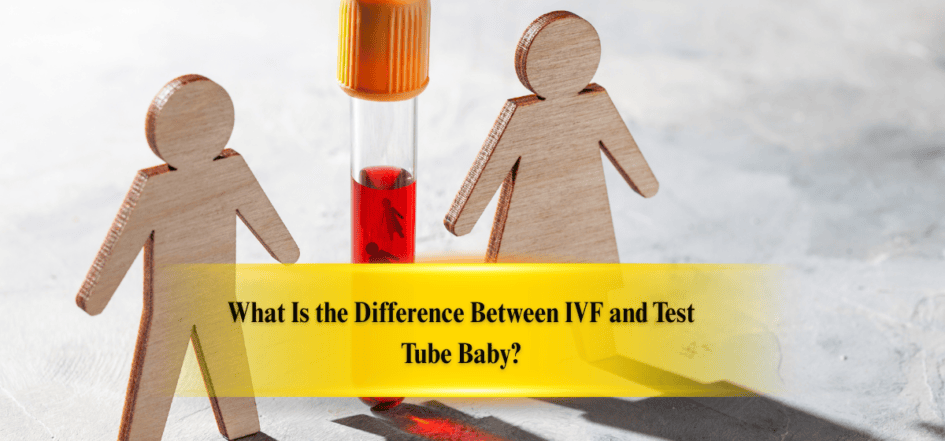
In simple terms, IVF and “test tube baby” generally refer to the same fertility treatment. The term “test tube baby” became popular because fertilisation takes place outside the body in a laboratory during IVF. However, IVF (In Vitro Fertilisation) is the medically accurate term and is commonly used by fertility specialists.
The basic idea of IVF is to bring together two important parts of the fertility process: an egg and sperm. In a laboratory culture dish, an egg can be fertilised by sperm. The resulting embryo can then be transferred to the uterus, where pregnancy may continue.
Understanding the terminology, treatment process, possible benefits, limitations, risks, and factors that can influence IVF outcomes can help patients make informed decisions about their fertility care.
Understand the difference between IVF and test tube baby, including the process, benefits, risks, and how to choose the Best ivf specialist in delhi
Table of Contents
| Sr# | Headings |
|---|---|
| 1 | What Is IVF? |
| 2 | What Does “Test Tube Baby” Mean? |
| 3 | What Is the Difference Between IVF and a Test Tube Baby? |
| 4 | Why Is IVF Known as a Test Tube Baby? |
| 5 | How Does the IVF Process Work? |
| 6 | Who Is an IVF Candidate? |
| 7 | What Are the Advantages of IVF? |
| 8 | What Factors Affect IVF Success? |
| 9 | Is IVF Safe for the Mother and Baby? |
| 10 | How Long Does IVF Take? |
| 11 | What Is the Cost of IVF? |
| 12 | How to Choose an IVF Specialist? |
| 13 | Common Myths and Misconceptions About Test Tube Babies |
| 14 | Conclusion |
| 15 | FAQs |
1. What Is IVF?
IVF stands for In Vitro Fertilisation. It is an assisted reproductive technology used to help people experiencing infertility conceive.
During IVF, eggs are retrieved from the ovaries and combined with sperm in a specialised laboratory. If fertilisation occurs, the resulting embryo is monitored during its early development. A suitable embryo may then be transferred into the uterus.
IVF may help address different fertility problems. For some patients, it can help overcome difficulties with fertilisation. For others, it may be considered because of factors such as blocked fallopian tubes, severe male-factor infertility, endometriosis, reduced ovarian reserve, or unexplained infertility.
The exact IVF approach depends on the individual’s fertility history, test results, age, reproductive health, and other relevant factors.
2. What Does “Test Tube Baby” Mean?
“Test tube baby” is a popular term used to describe a baby conceived through IVF.
The term became widely used because fertilisation takes place outside the body in a laboratory. However, the expression can sometimes create confusion.
A baby does not grow inside a test tube until birth. Instead, the egg and sperm are brought together in the laboratory, and an embryo develops for a short period under carefully controlled conditions.
When appropriate, the embryo is transferred into the uterus. If implantation occurs, pregnancy continues inside the uterus.
Therefore, “test tube baby” is a common expression, while IVF is the medical term for the treatment.
3. What Is the Difference Between IVF and a Test Tube Baby?
Generally, there is no separate treatment called “test tube baby.”
The important distinction is in how the terms are used:
| IVF | Test Tube Baby |
|---|---|
| Medical term | Popular or layman’s term |
| Stands for In Vitro Fertilisation | Usually refers to a baby conceived through IVF |
| Describes the fertility treatment | Describes the outcome of the treatment |
| Used by fertility specialists | Commonly used by the general public |
Therefore, when someone asks whether they should consider IVF or a test tube baby, they are usually referring to the same underlying fertility treatment.
4. Why Is IVF Known as a Test Tube Baby?
The term “test tube baby” gained popularity because IVF involves removing an egg and obtaining sperm so that fertilisation can take place outside the body.
During IVF, fertilisation occurs in a specialised laboratory environment. The embryo is then monitored during its early development before an appropriate embryo may be transferred to the uterus.
It is important to understand that the embryo is not left in a test tube until birth.
After the appropriate stage of development, the embryo can be transferred into the uterus. If the embryo successfully implants, pregnancy develops inside the uterus.
The phrase “test tube baby” is therefore a simplified description of IVF rather than the name of a separate treatment.
5. How Does the IVF Process Work?
IVF involves several stages. The exact process can vary depending on the patient’s medical circumstances and the treatment protocol recommended by the fertility specialist.
5.1 Initial Fertility Assessment
Before starting IVF, a fertility assessment is generally performed. When appropriate, both partners may be evaluated.
The assessment may include:
- Hormonal blood tests
- Ultrasound examination of the ovaries
- Assessment of ovarian reserve
- Evaluation of the uterus and reproductive organs
- Semen analysis
- Review of previous fertility treatment and medical history
The findings help the fertility team develop an individualised treatment plan.
5.2 Ovarian Stimulation
During ovarian stimulation, fertility medicines are used to encourage the ovaries to develop multiple follicles containing eggs.
The purpose is to obtain more than one mature egg because not every retrieved egg will necessarily fertilise or develop into a suitable embryo.
The response to stimulation is monitored through ultrasound examinations and, when required, blood tests.
5.3 Egg Retrieval
When the follicles are considered ready, egg retrieval is performed.
The eggs are generally retrieved using a specialised needle guided through the vagina to the ovaries. Medication or sedation may be used to improve comfort during the procedure.
The retrieved eggs are then transferred to the IVF laboratory.
5.4 Sperm Collection
A semen sample is usually obtained from the male partner on the day of egg retrieval or according to the clinic’s treatment plan.
In some cases, when sperm cannot be obtained through ejaculation, a specialist may recommend a procedure to retrieve sperm directly from the reproductive tract.
5.5 Fertilisation
The embryology team performs fertilisation in the laboratory.
Depending on the patient’s circumstances, the fertility specialist may recommend conventional IVF or IVF with ICSI.
With ICSI, a single sperm is injected directly into an egg. ICSI may be considered in situations such as certain forms of male-factor infertility or previous fertilisation problems.
5.6 Embryo Development
After fertilisation, the embryos are monitored in the laboratory as they develop and divide.
The embryology team evaluates embryo development and determines which embryos may be suitable for transfer or cryopreservation, depending on the treatment plan.
5.7 Embryo Transfer
An appropriate embryo may be transferred into the uterus using a thin catheter.
Compared with egg retrieval, embryo transfer is generally a simpler procedure and usually does not require surgery.
The number of embryos transferred depends on factors such as the patient’s age, embryo characteristics, medical history, and applicable clinical recommendations.
5.8 Pregnancy Test
A pregnancy test is performed after embryo transfer at the time recommended by the fertility team.
If the test is positive, further tests and examinations may be performed to monitor the pregnancy and confirm appropriate development.
6. Who Is an IVF Candidate?
IVF may be considered for people experiencing different causes of infertility.
A fertility specialist may discuss IVF in situations involving:
- Blocked or damaged fallopian tubes
- Ovulation problems
- Endometriosis
- Reduced ovarian reserve
- Certain forms of male-factor infertility
- Unexplained infertility
- Previous unsuccessful fertility treatments
- Certain fertility preservation circumstances
However, IVF is not automatically appropriate for every person experiencing infertility.
A fertility specialist considers factors such as age, ovarian reserve, sperm parameters, previous treatments, reproductive anatomy, medical history, and the duration and cause of infertility before recommending a treatment approach.
7. What Are the Advantages of IVF?
IVF provides fertility specialists with the ability to manage fertilisation and early embryo development in a controlled laboratory environment.
Some potential advantages include:
1. Treatment for a Broad Range of Infertility Problems
IVF may be used in different infertility situations, including certain female-factor, male-factor and unexplained infertility cases.
2. Embryo Cryopreservation
In appropriate circumstances, embryos that are not transferred immediately may be frozen for potential future use.
3. Embryo Assessment
Embryologists can monitor embryo development during the laboratory stage and determine which embryos may be considered for transfer according to the treatment plan.
4. Use With Other Reproductive Technologies
Depending on individual circumstances, IVF can be combined with techniques such as ICSI and other assisted reproductive technologies.
5. Fertility Preservation
Eggs or embryos may be frozen before certain medical treatments that could affect future fertility, when clinically appropriate.
It is important to remember that IVF does not guarantee pregnancy or a live birth. Outcomes vary from patient to patient.
8. What Factors Affect IVF Success?
Many people want to know the success rate of IVF. However, there is no single success rate that applies to every patient.
Several factors can influence IVF outcomes.
Age
Age is an important factor in fertility treatment because egg quantity and quality generally change with increasing age.
Ovarian Reserve
Ovarian reserve provides information about the remaining egg supply. Tests such as AMH and antral follicle count may be used as part of fertility assessment.
Sperm Factors
Sperm concentration, movement and morphology can influence fertility treatment decisions and may determine whether techniques such as ICSI should be considered.
Embryo Development
The development and characteristics of embryos can influence the likelihood of successful implantation and pregnancy.
Uterine and Endometrial Factors
The condition of the uterus and endometrium can also be relevant to embryo implantation and pregnancy.
Other Medical Conditions
Conditions such as endometriosis, fibroids and PCOS may affect fertility treatment and its expected outcome.
When comparing IVF success rates between clinics, couples should understand how the statistics were calculated, which patients were included, and whether the figures are directly relevant to their own circumstances.
9. Is IVF Safe for the Mother and Baby?
Like other medical treatments, IVF has potential risks and complications.
Ovarian stimulation can sometimes cause ovarian hyperstimulation syndrome (OHSS). Egg retrieval also carries procedural risks, although serious complications are uncommon.
Pregnancy following IVF can involve the usual risks associated with pregnancy. Certain risks may also vary depending on factors such as maternal age, underlying medical conditions, and whether a multiple pregnancy occurs.
Clinics may use strategies such as single embryo transfer when appropriate to reduce the likelihood of multiple pregnancy.
Your fertility specialist should discuss the potential benefits and risks of IVF according to your individual medical circumstances.
10. How Long Does IVF Take?
The duration of IVF varies depending on the treatment protocol and individual circumstances.
A typical IVF cycle involves ovarian stimulation, monitoring, egg retrieval, fertilisation, embryo development and embryo transfer or embryo freezing.
Some patients may complete the treatment process within a few weeks, while the overall evaluation and treatment journey can take several months.
Treatment may take longer if additional investigations or medical treatment are required before IVF.
It is useful to ask your fertility specialist questions such as:
- What will my individual IVF treatment plan look like?
- How many monitoring appointments will I need?
- When will my egg retrieval be performed?
- Will my embryo be transferred in the same cycle or frozen for a later transfer?
- Are there any medical conditions that should be treated before IVF?
Understanding the timeline can help you prepare both physically and emotionally for treatment.
11. What Is the Cost of IVF?
The cost of IVF varies between clinics and depends on the treatment plan.
Factors that may influence the total cost include:
- Number of IVF cycles required
- Fertility medications
- Blood tests and ultrasound monitoring
- Egg retrieval
- Embryology laboratory services
- ICSI, if recommended
- Embryo freezing and storage
- Frozen embryo transfer
- Additional investigations or procedures
Before selecting a fertility clinic, it is advisable to request an itemised estimate of treatment costs.
The lowest advertised package may not include every expense associated with treatment. Asking about additional charges in advance can help prevent unexpected costs.
12. How to Choose the Best IVF Specialist?
Choosing a fertility specialist is an important part of your treatment journey.
If you are searching online for the Best ivf specialist in delhi, consider more than online rankings, advertisements or promotional claims.
Some factors to consider include:
Experience
Ask about the specialist’s experience with fertility problems similar to yours.
Treatment Approach
Your doctor should explain why a particular treatment is being recommended and what alternatives may be available.
Laboratory Facilities
Embryology is an important part of IVF. The laboratory’s facilities, procedures and embryology expertise are therefore important considerations.
Communication
You should feel comfortable discussing