Introduction
If you’ve been trying to conceive and have been told that your fallopian tubes are blocked or damaged, you’re probably wondering whether IVF can still help. After all, IVF is often recommended specifically for women with tubal problems. So, can IVF fail because of damaged fallopian tubes?
The short answer is yes—but not always for the reasons you might think.
While IVF bypasses the fallopian tubes, certain types of severe tubal damage can still reduce the chances of a successful pregnancy. Fortunately, modern fertility treatments have advanced significantly, and many women with damaged tubes go on to have healthy pregnancies after receiving the right care.
Think of your reproductive system like a road network. Normally, the fallopian tubes are the highways that allow the egg and sperm to meet. IVF creates an entirely new route by bringing fertilization into the laboratory. However, if the damaged highways leak harmful substances into the uterus, they can still affect the final destination.
Discover how damaged fallopian tubes affect IVF success, treatment options, and fertility outcomes. Learn when to consult the best IVF specialist in New Delhi for expert, personalized care.
Let’s understand how damaged fallopian tubes influence IVF success and what can be done to improve the chances of pregnancy.
1. What Are Fallopian Tubes?
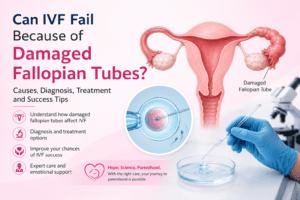
The fallopian tubes are two thin tubes that connect the ovaries to the uterus. They play a vital role in natural conception by helping the egg and sperm meet.
What Do the Fallopian Tubes Do?
Their main functions include:
- Picking up the egg after ovulation
- Providing a place where the sperm and egg can meet for fertilization
- Carrying the fertilized embryo safely to the uterus for implantation
If one or both fallopian tubes become blocked, scarred, or swollen, it becomes much harder—or even impossible—for a natural pregnancy to occur.
2. What Causes Fallopian Tube Damage?
Several health conditions and infections can damage the fallopian tubes and affect fertility.
Pelvic Inflammatory Disease (PID)
PID is one of the most common causes of fallopian tube damage. It can lead to inflammation, scarring, and blockage.
Endometriosis
Endometriosis occurs when tissue similar to the uterine lining grows outside the uterus. This can cause inflammation, scar tissue, and adhesions around the fallopian tubes.
Previous Abdominal or Pelvic Surgery
Surgery in the pelvic area may lead to scar tissue that affects the normal function of the fallopian tubes.
Sexually Transmitted Infections (STIs)
Untreated infections, such as chlamydia and gonorrhea, can permanently damage the fallopian tubes.
Genital Tuberculosis
In countries like India, genital tuberculosis remains an important cause of infertility and tubal blockage.
Previous Ectopic Pregnancy
A previous ectopic pregnancy can damage one or both fallopian tubes, reducing the chances of natural conception.
3. Can You Get Pregnant Naturally with Damaged Fallopian Tubes?
Yes, but it depends on how severely the tubes are damaged.
If One Tube Is Healthy
Natural pregnancy is still possible because one healthy tube can successfully transport the egg.
If the Tubes Are Partially Blocked
Pregnancy may still occur, but the chances are lower, and the risk of an ectopic pregnancy may be higher.
If Both Tubes Are Blocked
Natural conception becomes very unlikely. In these situations, IVF is usually the most effective fertility treatment because it bypasses the fallopian tubes completely.
4. How IVF Works Despite Damaged Fallopian Tubes
Many couples wonder why IVF is recommended when the fallopian tubes are damaged.
The answer is simple—IVF bypasses the tubes altogether.
During an IVF Cycle:
- Eggs are collected directly from the ovaries.
- The eggs are fertilized with sperm in a laboratory.
- The embryos are carefully monitored for several days.
- A healthy embryo is transferred directly into the uterus.
Since fertilization happens outside the body, the fallopian tubes are no longer needed.
This is why IVF is considered the gold standard treatment for women with blocked or severely damaged fallopian tubes.
5. Can Damaged Fallopian Tubes Still Cause IVF Failure?
Yes—but only in certain situations.
Not every type of tubal damage affects IVF in the same way.
Simple Tubal Blockage
A simple blockage usually has little or no effect on IVF success because the tubes are bypassed.
Hydrosalpinx
Hydrosalpinx is a condition where a damaged fallopian tube becomes filled with fluid. This is one of the biggest concerns because it can reduce IVF success rates.
Chronic Infection
Ongoing inflammation or infection may interfere with embryo implantation.
Severe Pelvic Adhesions
Extensive scar tissue can make egg retrieval more challenging during IVF.
Among all these conditions, hydrosalpinx has the greatest impact on IVF outcomes.
6. Understanding Hydrosalpinx and IVF
Hydrosalpinx develops when a fallopian tube becomes blocked and fills with fluid.
This fluid may leak back into the uterus, creating an unhealthy environment for the embryo.
Why Is Hydrosalpinx a Problem?
The fluid can:
- Wash away the embryo
- Reduce implantation rates
- Cause inflammation inside the uterus
- Affect the uterine lining
- Lower pregnancy success rates
Research has shown that untreated hydrosalpinx can significantly reduce IVF success and increase the risk of miscarriage.
The good news is that treating hydrosalpinx before IVF often improves pregnancy outcomes.
7. Signs You May Have Damaged Fallopian Tubes
Many women have no noticeable symptoms, which is why tubal damage often goes undiagnosed until fertility testing begins.
Possible Warning Signs
- Difficulty getting pregnant
- Chronic pelvic pain
- Painful menstrual periods
- Pain during intercourse
- History of pelvic infections
- Previous ectopic pregnancy
- Unusual vaginal discharge
- Lower abdominal discomfort
If you experience any of these symptoms, it’s important to consult a fertility specialist for further evaluation.
8. How Doctors Diagnose Tubal Damage
Doctors use several tests to check whether the fallopian tubes are open and functioning properly.
Hysterosalpingography (HSG)
A special dye is injected into the uterus, followed by X-rays to determine whether the tubes are open.
Sonosalpingography
This ultrasound-based test uses saline or a contrast solution to evaluate the fallopian tubes.
Laparoscopy
A minimally invasive surgical procedure that allows the doctor to directly examine the fallopian tubes and surrounding organs.
Pelvic Ultrasound
Although it cannot detect every blockage, ultrasound can identify hydrosalpinx and other pelvic abnormalities.
Early diagnosis helps fertility specialists create the most effective treatment plan.
9. Treatment Before IVF
Depending on the severity of the damage, your fertility specialist may recommend treatment before starting IVF.
Removal of the Damaged Tube
If hydrosalpinx is present, removing the affected tube often improves IVF success rates.
Tubal Clipping
The damaged tube is sealed to prevent harmful fluid from flowing into the uterus.
Antibiotic Treatment
If an infection is present, antibiotics may be prescribed before IVF begins.
Treatment for Endometriosis
Managing endometriosis can improve implantation and overall IVF outcomes.
These treatments help create a healthier environment for embryo implantation.
10. IVF Success Rates After Tubal Treatment
The encouraging news is that many women achieve healthy pregnancies after proper treatment.
IVF success depends on several important factors, including:
- Age
- Egg quality
- Embryo quality
- Uterine health
- Male fertility factors
- Overall health
Women who receive treatment for hydrosalpinx before IVF often have significantly better pregnancy rates than those who do not.
This is why every fertility treatment plan should be personalized.
11. Tips to Improve IVF Success
Although no fertility treatment can guarantee pregnancy, these steps may improve your chances.
Choose an Experienced Fertility Specialist
Consulting the best ivf specialist in new delhi ensures a thorough evaluation and a treatment plan tailored to your individual needs.
Complete All Recommended Tests
Never skip fertility investigations, as they help identify hidden problems before IVF begins.
Treat Underlying Health Conditions
Manage infections, thyroid disorders, endometriosis, and hormonal imbalances before treatment.
Maintain a Healthy Weight
Both obesity and being underweight can negatively affect fertility and IVF outcomes.
Follow a Nutritious Diet
Include:
- Fresh fruits
- Green vegetables
- Whole grains
- Lean protein
- Healthy fats
Avoid Smoking and Alcohol
These habits can reduce egg quality, sperm quality, and embryo development.
Manage Stress
Regular exercise, meditation, yoga, and adequate sleep can support your physical and emotional well-being during IVF.
12. When Should You Consult a Fertility Specialist?
You should seek professional advice if:
- You have been trying to conceive for one year (or six months if you are over 35)
- You have blocked or damaged fallopian tubes
- You have experienced recurrent miscarriages
- You have severe endometriosis
- You have a history of pelvic infections
- You have irregular menstrual cycles
- You have had an ectopic pregnancy
Consulting the best ivf specialist in new delhi can help identify the underlying cause of infertility and determine the most suitable treatment option.
13. Emotional Well-being During IVF
IVF is more than just a medical treatment—it is an emotional journey.
It is completely normal to experience a mix of hope, anxiety, excitement, and disappointment throughout the process.
Remember to:
- Know that you are not alone.
- Ask questions whenever you have concerns.
- Lean on family and friends for emotional support.
- Join fertility support groups if needed.
- Celebrate every milestone, no matter how small.
Taking care of your emotional health is just as important as looking after your physical health during fertility treatment.
14. Final Thoughts
Damaged fallopian tubes are one of the leading causes of female infertility, but they do not automatically mean IVF will fail.
Because IVF bypasses the fallopian tubes, many women with tubal infertility successfully achieve pregnancy through assisted reproductive technology.
However, conditions such as hydrosalpinx can reduce IVF success if they are left untreated. Fortunately, proper diagnosis, timely treatment, and a personalized fertility plan can greatly improve the chances of a successful pregnancy.
If you’ve been diagnosed with blocked or damaged fallopian tubes, don’t lose hope. Modern fertility treatments continue to help thousands of couples achieve their dream of parenthood. Consulting the best ivf specialist in new delhi can help you understand your options, improve implantation rates, and move one step closer to a healthy pregnancy.
Frequently Asked Questions (FAQs)
1. Can IVF work if both fallopian tubes are blocked?
Yes. IVF completely bypasses the fallopian tubes, making it one of the most effective treatments for women with bilateral tubal blockage.
2. Does hydrosalpinx always require surgery before IVF?
Not always. However, many fertility specialists recommend removing or blocking the affected tube because untreated hydrosalpinx can significantly reduce IVF success rates.
3. Can damaged fallopian tubes increase the risk of miscarriage?
Yes. Conditions such as hydrosalpinx may increase the risk of implantation failure and miscarriage if left untreated.
4. Can damaged fallopian tubes be repaired instead of choosing IVF?
In some cases, tubal repair surgery may be an option. However, when the damage is severe or both tubes are affected, IVF usually offers higher pregnancy success rates.
5. How can I improve my IVF success if I have damaged fallopian tubes?
Follow your fertility specialist’s recommendations, complete all necessary tests, treat conditions such as hydrosalpinx before IVF, maintain a healthy lifestyle, and seek care from an experienced fertility expert for the best possible outcome.